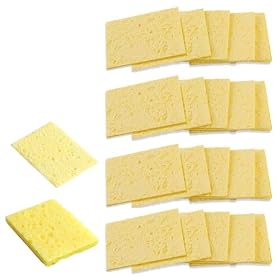
Brass wool and damp sponges both clean soldering tips, but they behave differently. Brass wool usually preserves working temperature better, while a sponge is inexpensive and effective when used correctly.
Brass wool is usually the better everyday cleaner for a soldering tip because it removes residue with less temperature loss than a wet sponge. A damp sponge is still useful, especially for wiping away excess solder or cleaning between jobs, but its water can cool the tip sharply. The best choice depends on your station, tip-care habits, and the type of soldering you do.
Brass wool versus a wet sponge at a glance
| Feature |
Brass wool |
Damp soldering sponge |
| Temperature drop |
Small |
Noticeable, sometimes large |
| Tip recovery |
Usually fast |
Takes longer after each wipe |
| Tip wetting |
Leaves more solder on the tip |
Can leave the tip relatively bare |
| Tip wear |
Generally gentle when used correctly |
Repeated thermal shock may shorten tip life |
| Cleaning action |
Loosens oxidation and residue by wiping |
Wipes away residue with moisture |
| Ongoing maintenance |
Replace or fluff the wool when contaminated |
Keep damp and rinse out solder residue |
| Best use |
Frequent cleaning during soldering |
Occasional cleaning or removing stubborn residue |
When brass wool is the better choice
Brass wool, sometimes called brass tip cleaner, is made from loosely packed brass shavings. Insert the hot tip into the wool and twist or wipe it lightly. The movement removes excess solder and residue without requiring water.
Its main advantage is that the tip stays closer to its working temperature. That matters when you are making many joints, working with larger thermal masses, or using a temperature-controlled station that needs to recover after each cleaning cycle.
Brass wool also tends to leave a thin layer of solder on the tip. That is useful because a tinned tip transfers heat better and is less exposed to oxidation than a completely bare tip.
Use light contact rather than force. Aggressive scrubbing is unnecessary and can wear the tip coating over time, especially if the tip is already damaged or has a thin plating layer.
When a damp sponge still makes sense
A soldering sponge is a simple, low-cost option. Wet it with clean water, then squeeze it until it is damp rather than dripping. Wipe the hot tip across the surface briefly instead of pressing it into the sponge.
A sponge can be useful when:
- You need to remove a visible blob of solder quickly.
- You want to wipe away flux residue or contamination between tasks.
- Your soldering iron holder is designed around a sponge.
- You already have a sponge and do not solder continuously.
- You need a final wipe before switching to a different solder or task.
The disadvantage is the temperature shock. Water removes heat from the tip quickly, so the iron may take a moment to return to its set temperature. Repeated hot-tip-to-wet-sponge contact can also stress the tip coating. This does not mean a sponge will immediately ruin a tip, but it is a reason to avoid unnecessary wiping and never use an excessively wet sponge.
Which cleaner is gentler on soldering tips?
For routine use, brass wool is generally the gentler option because it avoids repeated contact with water and causes less temperature change. However, tip life depends more on overall care than on the cleaner alone.
To reduce wear with either method:
- Keep the tip lightly tinned while the iron is hot.
- Clean only when residue interferes with solder flow or heat transfer.
- Avoid scraping the tip against metal objects or abrasive materials.
- Do not use steel wool, sandpaper, files, or knife edges on plated tips.
- Use the temperature range recommended by the iron, station, tip, and solder manufacturer.
- Apply fresh solder after cleaning if the tip looks dry or dull.
A dark or discolored tip is not automatically ruined. If solder still wets the working surface evenly, it may be usable. If solder beads up repeatedly, will not wet the surface, or the plating is visibly missing, cleaning alone may not restore it; replacement is usually the sensible next step.
Which one removes oxidation better?
Both can remove surface residue, but neither is a reliable cure for a severely oxidized or damaged tip. Brass wool can loosen light oxidation while retaining some solder on the tip. A damp sponge can expose a clean surface, but the tip should be tinned immediately afterward.
For a tip that will not accept solder:
- Confirm that the iron is reaching the temperature specified for the solder and tip.
- Add fresh solder or flux-core solder to the heated tip.
- Wipe briefly with brass wool or a properly damp sponge.
- Immediately add fresh solder again to re-tin the working surface.
- Repeat only a few times; do not keep scrubbing a plated tip.
Tip tinner or a manufacturer-approved reactivation product may help with light oxidation, but follow its instructions. If the working plating is pitted, cracked, or gone, replace the tip rather than trying to grind it clean.
How to choose for your soldering setup
Choose brass wool if you solder frequently, want fast temperature recovery, use fine-pitch components, or want a cleaner that does not require water at the bench.
Choose a damp sponge if you solder occasionally, need an inexpensive conventional cleaner, or prefer wiping away residue with a moist surface. Keep a spare sponge available if the original becomes hard, torn, contaminated, or difficult to keep evenly damp.
Many electronics workbenches keep both. Brass wool handles normal cleaning during a session, while a damp sponge can handle a specific cleanup task. Having both also provides a backup if one cleaner is unavailable.
Practical tip-cleaning routine
Before making a joint, melt a small amount of solder onto the tip so the working surface is coated. During soldering, clean the tip only when excess solder, burnt flux, or contamination begins to affect the joint.
For brass wool, insert and withdraw the tip with a light twisting motion. For a sponge, make one or two quick wipes across a damp—not saturated—surface. Then apply a small amount of fresh solder before returning to the work.
Do not leave the iron hot and dry for long periods. If you are pausing for more than a short interval, follow the station manufacturer's standby or shutdown guidance and protect the tip with a light solder coating.
Bottom line
Brass wool is the better default for most electronics soldering because it cleans effectively without the pronounced temperature drop caused by water. A damp sponge remains a valid option when it is properly moistened and used briefly. Whichever cleaner you choose, light wiping, regular tinning, correct temperature, and timely tip replacement matter more than aggressive cleaning.