A cheap unregulated iron can handle occasional basic soldering, but a temperature-controlled station offers more consistent heat, better recovery, and greater control for electronics work.
A cheap unregulated soldering iron can work for occasional repairs, wires, and simple joints. However, a temperature-controlled station is usually the better choice for repeated electronics work because it regulates tip temperature instead of relying on a fixed heater output. That control can reduce overheated pads, improve solder flow, and make delicate work easier to repeat.
What is the difference?
Cheap unregulated iron
An unregulated iron typically has a heating element connected to a basic power source. It may be described by its wattage, but wattage is not the same as a controlled operating temperature. As the iron heats, its tip temperature can rise significantly when it is left idle. It then cools when touching a large joint or heat-conductive part.
This can make the iron unpredictable:
- The tip may become hot enough to damage flux, insulation, or circuit-board pads.
- The temperature may drop sharply on larger joints.
- Solder may melt quickly at one moment and poorly a few seconds later.
- The iron may require frequent tip cleaning and re-tinning.
Some inexpensive irons have adjustable power or a dial, but unless the tool uses temperature feedback, that adjustment does not necessarily provide accurate tip-temperature control.
Temperature-controlled station
A temperature-controlled station uses a sensor and control circuit to regulate the heating element. You select a target temperature, and the station adjusts power as the tip heats, cools, or contacts a joint.
This does not make the tool immune to poor technique, but it generally provides:
- More stable working temperature
- Faster recovery after contact with a joint
- Better consistency between solder joints
- Lower risk of excessive heat when the correct setting is used
- Easier adjustment for different solder, components, and joint sizes
The station’s displayed temperature is not always identical to the actual temperature at the working surface. Tip condition, tip shape, calibration, airflow, and the design of the heater all affect real-world performance. Even so, feedback control is a meaningful improvement over a fixed-output iron.
Which one is better for electronics?
For occasional low-cost work, an unregulated iron may be adequate. It can be practical for basic wire splices, large terminals, simple hobby projects, or jobs where precision and repeatability are not important.
A temperature-controlled station is the safer general choice for circuit boards, connector work, through-hole assembly, and repeated repairs. It is especially useful when you need to work near:
- Small pads and fine traces
- Plastic connectors
- Insulated wires
- Surface-mount components
- Ground planes that draw heat away from the joint
- Components with heat-sensitive leads
Temperature control does not replace proper technique. Keeping contact time short, using the correct tip, adding flux when appropriate, and avoiding excessive pressure still matter.
Heat, wattage, and recovery
Wattage describes how much electrical power the iron can use, not the exact temperature it will maintain. A higher-wattage uncontrolled iron can still overheat an idle tip. A lower-wattage controlled station may perform better for electronics if it maintains its set temperature and recovers efficiently.
For purchase decisions, consider three related characteristics:
Set-temperature control
The station should let you choose a target temperature suitable for the solder and workpiece. A useful control interface makes it easy to change settings without accidentally changing them during use.
Thermal recovery
Recovery is how quickly the tip returns toward its target temperature after transferring heat into a joint. Good recovery helps with larger joints and ground planes, but it does not mean the tool can heat any object instantly. The tip size, joint design, board construction, and solder type remain important.
Heater and sensor placement
Different irons place the heater and temperature sensor in different locations. Designs that sense temperature close to the tip can generally respond more directly to changes at the working area. Check the manufacturer’s documentation rather than judging performance from wattage alone.
Tip compatibility matters more than many buyers expect
A station is only as useful as the tips available for it. Before buying, check:
- Which tip family the iron accepts
- Whether common shapes and sizes are available
- How tips are replaced
- Whether replacement tips are sold individually or in sets
- Whether the tip is integrated with the heater cartridge
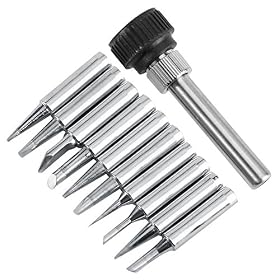
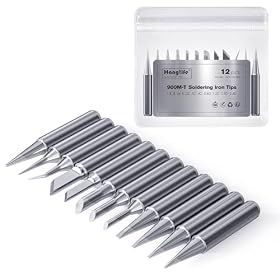
Conical tips are useful for access to small areas, while chisel or bevel tips often transfer heat more effectively to ordinary solder joints. Very fine tips are not automatically better; they may hold less heat and make larger joints harder to complete.
An unregulated iron may use inexpensive universal-looking tips, but compatibility should still be verified. A loose, poorly fitting, oxidized, or damaged tip can create heating and soldering problems regardless of the iron’s control system.
Ease of use and safety
A temperature-controlled station usually has a stable base, an iron holder, and a place for cleaning materials. These features help keep the hot tool under control between joints. A cheap iron may require a separate stand, and placing a hot iron on an unsuitable surface creates a burn and fire hazard.
For either type of tool:
- Use a stable, heat-resistant stand.
- Keep the cord away from the work area and hot surfaces.
- Wear eye protection when cutting leads or working with solder.
- Provide ventilation or use suitable fume extraction; do not deliberately breathe solder or flux fumes.
- Unplug the iron when finished and allow it to cool in a safe location.
- Follow the manufacturer’s instructions for grounding, cleaning, and tip replacement.
If the tool has a damaged cord, cracked housing, loose plug, or signs of overheating, stop using it. Do not open or repair mains-powered equipment unless you are qualified to do so.
When does a cheap iron make sense?
Choose an unregulated iron when most of the following are true:
- You solder only a few times per year.
- The work involves larger wires or simple joints.
- The project has little risk of damaging expensive boards or components.
- Low initial cost is more important than repeatability.
- You are willing to work slowly and monitor the tip closely.
It may also be useful as a backup tool for rough work, provided it is used with a proper stand and its limitations are understood.
When should you buy a temperature-controlled station?
A controlled station is worth prioritizing when:
- You repair or build electronics regularly.
- You work on circuit boards or small connectors.
- You need consistent results across many joints.
- You use different solder alloys or tip sizes.
- You are learning and want a more forgiving, predictable tool.
- Replacing a damaged board would cost more than upgrading the iron.
A station does not need to be elaborate to be useful. A reliable temperature control, compatible replacement tips, stable holder, and suitable power cord are more important than extra display features.
Common problems with either option
If solder will not melt consistently, check the simple causes first:
- Inspect and clean the tip. Remove residue using the manufacturer-approved method and apply a small amount of solder to keep the working surface tinned.
- Check the tip fit. A loose or incorrectly installed tip may not transfer heat properly.
- Use the correct tip shape. A slightly wider chisel or bevel tip may transfer heat better than a very fine point.
- Check the solder and flux. Old, contaminated, or unsuitable solder can make a joint appear to have a temperature problem.
- Confirm the temperature setting. On a controlled station, use the solder manufacturer’s guidance and the tool manufacturer’s recommendations.
- Reduce heat loss. Large ground planes, heavy wires, and metal connectors may require a suitable tip and a station with adequate recovery, not simply a higher uncontrolled temperature.
- Stop if the iron behaves abnormally. Flickering power, a damaged cord, smoke from the handle, or uncontrolled overheating is a reason to unplug the tool and consult the manufacturer or a qualified technician.
If the station cannot hold temperature, the display behaves erratically, or the heater repeatedly fails, a compatible replacement cartridge or tip may solve the problem when those parts are designed to be replaceable. If the control unit, cord, or internal electronics are damaged, replacing the station is usually more sensible than attempting an unsafe repair.
Bottom line
A cheap unregulated iron is acceptable for occasional, low-consequence soldering, but its heat can vary substantially during use. For electronics work, a temperature-controlled station is the better long-term choice because it offers more predictable heat, better recovery, and easier control near delicate components. Buy based on temperature regulation, tip availability, safe storage, and serviceable replacement parts—not wattage alone.