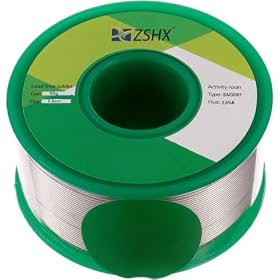
The first-year cost of soldering tips and solder depends mainly on how often you solder, which solder alloy and diameter you choose, and how well you maintain your tips. A casual electronics hobbyist may need only a small amount of solder and a replacement tip or two, while frequent repair or assembly work can require several tips and multiple spools.
The simplest estimate is:
First-year consumable cost = replacement tips + solder used + optional maintenance supplies
This estimate does not include the soldering station, iron, hand tools, electricity, or labor.
What to include in the estimate
Replacement soldering tips
Count the tips included with your iron or station separately from the tips you expect to buy during the year. The included tips may cover your normal work for some time, but tip life varies with:
- Soldering temperature
- Leaded versus lead-free solder
- Use of flux and tip-cleaning materials
- How long the tip remains heated
- Whether the tip is kept tinned between joints
- Tip geometry and the amount of mechanical wear
A replacement cost estimate should include the tip shapes you actually use. A fine conical tip, chisel tip, and larger bevel tip are not interchangeable for every job, so buying a low-cost assortment that contains unsuitable shapes may not reduce your total cost.
For light use, start by budgeting for one replacement set or a few individual tips. For regular assembly, repair, or educational work, budget for additional spares so a worn or damaged tip does not interrupt a project.
Solder
Solder cost is affected by more than spool size. Check these specifications before comparing products:
- Alloy: Lead-free solder is common for current electronics work, while some users choose leaded solder for its lower working temperature and easier flow. Follow the requirements for your project and workplace.
- Flux core: The flux type and amount affect how the solder behaves and whether separate flux is needed.
- Diameter: Thin solder is useful for small pads and fine-pitch work. Thicker solder can deposit more material per feed and may be convenient for larger joints.
- Spool weight: Compare the amount of solder, not just the package price.
A spool that costs less but has less solder may not be the better value. If you switch between fine-pitch boards and larger wires, buying two diameters can also increase the first-year total.
A practical first-year calculation
Use the following worksheet with current prices from the products you are considering:
- Replacement tips: expected number of tips or tip sets × cost per tip or set
- Solder: expected number of spools × cost per spool
- Optional supplies: brass wool, a damp sponge, tip tinner, separate flux, or desoldering materials
- Add the amounts together.
For example, write down:
- Number of replacement tips: ___
- Cost per tip or set: ___
- Number of solder spools: ___
- Cost per spool: ___
- Maintenance supplies: ___
- Estimated first-year total: ___
If you already solder regularly, the most reliable method is to use your recent consumption. Weighing a new and partly used spool can show how much solder you used over a known period, although a simple count of spools is often sufficient for a rough estimate.
Three usage patterns to budget for
Occasional hobby use
If you solder only a few projects during the year, one spool may last a long time. Your main replacement cost may be a spare tip or a small selection of tip shapes. Avoid buying a large multipack unless the tips fit your iron and you expect to use them.
Regular electronics work
For weekly projects, repairs, or small assembly jobs, budget for more than one solder spool and at least one replacement tip. Keeping a spare in the most frequently used shape is usually more useful than owning many rarely used shapes.
Frequent repair or production work
Frequent use increases both solder consumption and tip wear. Estimate from a typical month, then multiply by the number of working months in the year. Add a reserve for rework, setup waste, contaminated tips, and jobs that use more solder than usual.
Do not assume that a tip is worn out solely because it has changed color. Replace it when it no longer wets properly, has damaged plating, develops a persistent unusable area, or cannot transfer heat effectively after proper cleaning and tinning.
Ways to lower the first-year cost
Use the lowest practical temperature
Set the station according to the solder and component requirements rather than leaving it unnecessarily hot. Excess heat can accelerate tip oxidation and damage sensitive components. Follow the station and solder manufacturer’s guidance.
Keep the tip tinned
A thin layer of solder helps protect the working surface during use and storage. Clean only as needed; aggressive or prolonged cleaning can shorten tip life.
Match the tip to the joint
A tip that is too small may require longer heating, while one that is too large can make it difficult to control solder placement. Choosing an appropriate shape can reduce rework and wasted solder.
Buy compatible tips
Tip compatibility is not universal. Check the soldering iron or station documentation for the correct tip series, dimensions, and compatible replacements before ordering.
Compare solder by usable quantity
Compare spool weight, alloy, diameter, and flux type together. A cheaper spool is not necessarily cheaper per usable amount, particularly if its diameter is poorly suited to your work.
What is usually worth buying first?
For a new electronics setup, prioritize:
- One solder diameter suited to your typical joints
- A compatible replacement tip in your most-used shape
- A second tip shape only if your projects require it
- A suitable cleaning and maintenance method
Separate flux, additional solder diameters, and larger tip assortments can wait until your work demonstrates a need for them. This approach keeps the first-year estimate tied to actual use instead of accessories that may remain unused.
When a replacement tip or iron makes more sense
Replace the tip when the working surface is damaged, refuses to wet after correct cleaning and tinning, or has worn plating. If several compatible replacement tips fail prematurely, inspect temperature settings, cleaning practices, solder compatibility, and the iron’s tip-contact system.
A replacement iron or station may be reasonable when compatible tips are no longer available, the handle connection is unreliable, temperature control is inconsistent, or repair costs approach the cost of a suitable replacement. Disconnect electrical equipment before inspecting it, and do not open or repair a mains-powered station unless you are qualified to do so. Follow the manufacturer’s instructions and use a qualified professional for electrical faults.