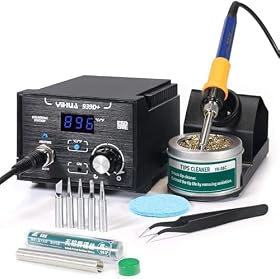
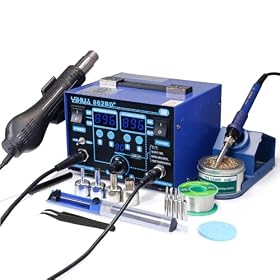
An ESD-safe soldering station is usually the safer choice for modern electronics because it controls the soldering tip’s electrical potential and can be integrated with an ESD-protected work area. A floating-tip iron electrically isolates the tip from earth and the heater, but isolation alone does not guarantee protection from static discharge or other voltage differences.
The important distinction is this: an ESD-safe station manages both static-control requirements and tip leakage specifications, while a floating-tip iron mainly describes how the tip is electrically isolated.
What “floating tip” means
A floating tip is not directly connected to protective earth or circuit ground. The tip is electrically isolated from the heating element and mains-related parts of the iron, usually through insulation or a transformer-based design.
That isolation can reduce the chance that a fault or unwanted heater voltage reaches the circuit being soldered. However, a floating tip may still accumulate static charge, and it may not provide a controlled path for dissipating charge from the work area.
“Floating” therefore does not automatically mean:
- ESD-safe
- properly grounded
- suitable for every static-sensitive component
- compatible with an ESD wrist strap or mat
- free from measurable tip-to-ground voltage or leakage
Check the manufacturer’s documentation for the actual tip-to-ground voltage, leakage current, insulation, and ESD compliance information rather than relying on the word floating alone.
What an ESD-safe station does
An ESD-safe station is designed to limit and control the electrical energy that can reach a component. Depending on the design, it may provide:
- A defined connection between the tip and protective earth or an ESD ground
- Controlled tip-to-ground resistance
- Low tip leakage current
- A grounded or equipotential station chassis
- Compatibility with ESD workstations and grounding accessories
- Temperature control that helps reduce overheating and unnecessary contact time
The exact requirements vary with the components and standards involved. A station marketed for ESD work should still be checked against the manufacturer’s published specifications and instructions.
A grounded tip is not the same as connecting the tip directly to circuit ground. The station should provide a controlled, safety-designed path—not an improvised wire from the tip to a random ground point.
The practical difference for electronics work
For ordinary through-hole repairs
A quality floating-tip iron may be adequate for basic work on non-sensitive circuits, especially when the iron has good insulation, stable temperature control, and an undamaged cord and plug.
Even in this situation, avoid assuming that a cheap or unbranded iron is safe because its tip floats. Poor insulation, switching noise, excessive leakage, or an abnormal fault can still damage a board or create a shock hazard.
For microcontrollers, sensors, and semiconductor devices
Choose an ESD-safe station when working with MOSFETs, microcontrollers, memory, sensors, wireless modules, and other components that can be damaged by electrostatic discharge. These parts may fail immediately or suffer latent damage that is not obvious during soldering.
An ESD-safe station is especially appropriate when:
- The component manufacturer specifies ESD precautions
- You repair or assemble modern circuit boards regularly
- You work on exposed boards with no protective enclosure
- You use an ESD mat, wrist strap, or grounded bench
- The work has to be repeatable and professionally documented
For mains-connected or mixed-voltage equipment
Soldering inside mains-powered equipment requires more than selecting a floating or ESD-safe tip. Unplug the equipment, allow capacitors to discharge as appropriate, and follow the service documentation. If the enclosure contains hazardous voltages, use qualified service procedures or have the work performed by a qualified professional.
Do not defeat the protective earth on a station to make its tip float. Do not use a two-prong adapter, cut a ground pin, or modify the station’s cord.
Key specifications to compare
Tip-to-ground voltage
This indicates the voltage measured between the tip and ground under specified conditions. Lower is generally preferable for sensitive electronics, but the number must be interpreted with the station’s other specifications and the manufacturer’s measurement method.
Tip leakage current
Leakage current describes unintended current that can flow from the tip toward ground or another reference. Sensitive components can be affected by very small electrical disturbances, so a published leakage specification is more useful than a general “safe for electronics” claim.
Tip-to-ground resistance
An ESD-safe tip often has a controlled resistance to ground rather than being completely isolated. This allows static charge to dissipate in a defined way while maintaining safety and avoiding a direct, uncontrolled connection.
Temperature control and stability
Temperature control does not itself make an iron ESD-safe, but it affects soldering quality and component stress. A station with a stable, adjustable temperature can reduce dwell time and help prevent lifted pads, overheated insulation, and damaged components.
The displayed temperature may not equal the exact temperature at the joint. Tip size, shape, contact with the work, airflow, and thermal recovery all affect actual soldering performance.
Grounding and ESD compatibility
Look for clear instructions covering:
- How to ground the station
- Whether the tip is intended to be grounded or controlled relative to earth
- How to connect an ESD mat or wrist strap
- Whether the station requires a properly grounded outlet
- What to do if the outlet has no verified protective earth
If the documentation does not explain these points, treat the station’s ESD claims cautiously.
ESD-safe station versus floating-tip iron: quick decision guide
Choose an ESD-safe station if you work on modern semiconductor-based electronics, need a controlled ESD workstation, or want documented tip leakage and grounding behavior.
Choose a floating-tip iron only when electrical isolation is the specific requirement, the manufacturer provides credible electrical specifications, and the work does not require a complete ESD-control setup. A floating tip can be useful, but it is not a substitute for an ESD-safe process.
For most electronics hobbyists and repair technicians, an ESD-safe station offers the more predictable long-term choice. It is easier to use consistently with an ESD mat and wrist strap, and its specifications are more directly relevant to protecting sensitive components.
A station cannot replace ESD handling practices
Even the right station will not prevent damage if the rest of the setup creates static discharge. Use a suitable ESD mat and wrist strap when the component and manufacturer instructions call for them. Keep the wrist strap and mat connected to the same approved reference point, and follow local electrical-safety requirements.
Also take these precautions:
- Handle components by their edges or designated handling areas.
- Keep sensitive parts in ESD packaging until needed.
- Avoid working on carpet or wearing highly static-generating clothing.
- Keep the iron tip clean and properly tinned.
- Inspect the cord, plug, insulation, and station ground connection regularly.
- Replace damaged tips, cords, or stations rather than bypassing safety features.
What to do if a floating iron damages a board
Stop using the iron until its electrical behavior is known. Do not assume the board failed because of temperature alone.
- Unplug the iron and inspect it. Look for a damaged cord, cracked housing, loose tip assembly, or signs of overheating.
- Check the manufacturer’s specifications. Look for tip-to-ground voltage, leakage current, insulation, and grounding information.
- Review the work setup. Check whether the board, operator, mat, and iron were at different electrical potentials.
- Try a documented ESD-safe station. Use the correct grounding arrangement and follow the station’s instructions.
- Inspect the board separately. A failed component, reversed connection, excessive heat, or solder bridge may have caused the fault.
Do not make live measurements on a mains-connected iron unless you have the training, rated instruments, and procedures to do so safely. For an inexpensive iron with unclear specifications, replacement with a documented ESD-safe station is generally more sensible than attempting an internal repair.
Bottom line
A floating-tip iron provides electrical isolation, while an ESD-safe station provides controlled electrical behavior intended to reduce static and leakage risks. For sensitive electronics, choose the station with published ESD-related specifications and use it as part of a properly grounded ESD workspace. Treat “floating tip” as one design characteristic—not proof that the iron is ESD-safe.