A soldering station can cost anywhere from a relatively small entry-level purchase to a substantial investment for professional electronics work. The right price depends mainly on temperature control, heat recovery, tip compatibility, ergonomics, safety features, and long-term replacement costs—not just the wattage printed on the box.
For occasional repairs, a basic temperature-controlled station is usually more practical than a premium professional unit. Frequent assembly, lead-free soldering, fine-pitch work, or production use can justify spending more on faster heat recovery, better handpiece comfort, and a stronger supply of compatible tips.
What determines soldering station cost?
Temperature control and heat recovery
The station should maintain a stable tip temperature when the tip contacts a joint. Better stations generally recover heat more quickly after soldering to a large pad, connector, ground plane, or other heat-absorbing part.
A higher maximum temperature does not automatically mean better performance. For electronics, stable control and useful adjustment at normal working temperatures matter more than an impressive top temperature.
Handpiece design and ergonomics
A lightweight, well-balanced handpiece can be worth paying for if you solder for long periods. Look for a comfortable grip, a flexible cord, a secure connection to the station, and a tip that does not wobble.
A station with excellent electronics can still be frustrating if the handpiece is bulky or the cord pulls against your work.
Tip availability and cost
Tips are consumables. Before buying a station, check whether compatible replacement tips are readily available and whether they come in the shapes your work requires.
A low initial purchase price can become less attractive if replacement tips are difficult to find or cost more than expected. Common tip shapes include conical, chisel, bevel, and hoof styles, but compatibility is determined by the station and handpiece design.
Included accessories
Some packages include a stand, brass tip-cleaning wool, a damp sponge, extra tips, a storage tray, or a soldering iron holder. These accessories can reduce the cost of getting started, but they should not outweigh the station's core performance.
Check what is actually included rather than assuming that a stand, extra tips, or a suitable power cord comes with every package.
Safety and electrical design
Useful safety features may include automatic sleep or shutdown, a secure stand, heat-resistant materials, and protection against overheating. For electronics work, proper grounding and manufacturer-specified electrical protection also matter.
Follow the manufacturer's instructions, especially when working with mains-powered equipment. Do not bypass grounding or use a station with damaged insulation, a frayed cord, or a loose power connection.
Typical cost levels
Exact prices change with brand, supply, included accessories, and promotions, so it is more useful to compare soldering stations by capability than by a fixed price label.
Entry-level temperature-controlled stations
The least expensive useful option is generally a basic temperature-controlled station rather than a plug-in iron with no adjustment. These stations are suited to occasional repairs, through-hole assembly, hobby projects, and learning.
Expect compromises such as slower heat recovery, fewer controls, a less refined handpiece, limited tip selection, or a less durable stand. They can still work well when joints are small and the user is not soldering continuously.
Mid-range soldering stations
A mid-range station is often the most sensible choice for regular electronics work. It may offer better temperature stability, faster recovery, improved ergonomics, more reliable construction, and broader tip availability.
This level makes sense for repeated repairs, kit assembly, prototyping, and hobbyists who want equipment that is easier to live with over time. The additional cost is often justified by reduced frustration and easier access to replacement parts.
Professional and production-oriented stations
Higher-end stations are designed for demanding, frequent, or specialized work. They may provide faster heat recovery, more precise control, interchangeable handpieces, extensive tip systems, calibration options, improved ESD protection, and better service support.
These features are valuable in production, repair environments, lead-free soldering, fine-pitch work, and applications where downtime or inconsistent joints are expensive. They may be unnecessary for occasional household repairs.
Soldering station versus soldering iron cost
A standalone soldering iron is usually cheaper and takes up less space. It can be a reasonable choice for occasional work, quick field repairs, or situations where portability matters.
A soldering station is generally the better long-term choice when you want adjustable temperature, a safer resting place for the hot tool, easier tip changes, and more consistent performance. The station also separates the controls and power supply from the hot handpiece, which can improve handling.
Do not compare only the purchase price. Include the cost of tips, a stand, cleaning supplies, flux, solder, and possible replacement handpieces. A low-cost iron may require additional accessories before it is convenient or safe to use.
Which features are worth paying for?
Prioritize these features when comparing models:
- Stable temperature control rather than an unusually high maximum temperature
- Good heat recovery for the size of joints you plan to solder
- Widely available replacement tips
- A comfortable, lightweight handpiece
- A stable, heat-resistant stand
- ESD protection for sensitive electronics when appropriate
- Sleep or automatic shutdown features for safety and tip life
- A cord and connector that do not interfere with bench work
- Manufacturer support and replacement-part availability
A digital display is convenient, but it does not by itself prove that a station controls temperature accurately. Likewise, high wattage can help with recovery, but it does not guarantee a better soldering experience.
How to avoid paying too much
Start with the work you actually do. A station for occasional through-hole projects does not need every feature intended for production or specialized rework.
Before buying, answer these questions:
- Will you solder occasionally or for several hours at a time?
- Will you work mostly on small signal wires, circuit boards, connectors, or large ground planes?
- Do you need lead-free solder capability?
- Are compatible tips easy to find?
- Is the handpiece comfortable enough for extended use?
- Does the package include a safe stand and basic cleaning accessories?
- Is the station properly grounded or otherwise suitable for your electronics work?
- Can you obtain replacement tips and other service parts later?
If you only need to make occasional repairs, spend enough to get temperature control, a stable stand, and accessible tips. If you solder frequently, prioritize heat recovery, ergonomics, durability, and the total cost of consumables.
Additional costs to budget for
The station is only part of the setup. You may also need:
- Replacement soldering tips
- Solder suited to the work
- Flux or flux-core solder
- Tip-cleaning wool or a damp sponge
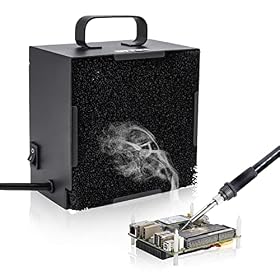
- A fume extractor or local ventilation
- Solder wick and a desoldering pump
- Heat-resistant work protection
- Magnification or lighting for small joints
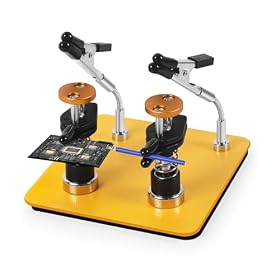
- Helping hands or a board holder
Fume control is especially important when soldering regularly. Follow the safety guidance for the solder and flux you use, and avoid directing fumes toward your face.
When a cheaper station is enough
Choose a basic station when you solder infrequently, work mostly on small joints, and do not need specialized tips or rapid recovery. It can also be a sensible learning tool if replacement tips are available and the station includes basic safety features.
Avoid the cheapest option if it has no meaningful temperature control, lacks a stable stand, uses hard-to-find tips, or has questionable electrical construction.
When a more expensive station is justified
Spend more when you solder often, work with lead-free materials, handle large thermal masses, assemble fine-pitch components, or need consistent results across many joints. A better handpiece and faster recovery can make a larger difference than extra display features.
For professional or production use, consider serviceability, calibration requirements, ESD protection, spare handpieces, and the availability of replacement tips before making a purchase.
Bottom line
The cost of a soldering station is best judged by capability and ownership cost. For occasional electronics work, a basic temperature-controlled station with available tips is usually sufficient. Regular users should consider a mid-range station with good heat recovery and ergonomics. Professional users may benefit from advanced control, ESD protection, service support, and a broader accessory system.
Compare the station, handpiece, tips, stand, safety features, and replacement-part availability together. That approach is more reliable than choosing solely by price, wattage, or display type.