A cheap soldering iron can be worth it for one kit if the project is small, occasional, and uses ordinary through-hole components. However, avoid the absolute cheapest unregulated irons: inconsistent heat, poor tips, and weak stands can make soldering frustrating and increase the risk of damaged pads or components. For most one-time projects, a basic temperature-controlled iron or compact station is the safer value.
When a cheap iron is enough
A low-cost iron is usually adequate when:
- You are assembling one small through-hole electronics kit.
- The circuit board has large, clearly spaced solder pads.
- You do not expect to solder regularly afterward.
- The iron has a replaceable, reasonably shaped tip.
- You can work at a stable surface with good lighting and ventilation.
Simple kits generally do not require an expensive professional station. They do require an iron that reaches soldering temperature reliably and transfers heat without excessive delay.
When the cheapest iron is a poor choice
Avoid a bargain iron with no temperature regulation if the kit includes small pads, delicate components, connectors, or heat-sensitive parts. An uncontrolled iron may run too cool at first and then become excessively hot after sitting in its stand. That can lead to:
- Cold, dull, or unreliable solder joints
- Lifted copper pads from overheating
- Melted insulation or plastic connectors
- Damaged circuit-board traces
- Longer contact time while you try to get the solder to flow
A very low-cost iron may also come with a tip that is difficult to tin or replace. If replacement tips are unavailable, the tool may become disposable after only a small amount of use.
Specifications that matter most
Temperature control
Temperature adjustment is the most useful upgrade over a basic fixed-temperature iron. It lets you use a moderate setting for ordinary electronics and adjust according to the solder and components. Temperature-controlled does not necessarily mean expensive; even a simple compact station can provide better control than a plug-in iron.
Follow the solder and kit instructions rather than choosing a temperature solely from a product listing. Lead-free solder often requires more heat than traditional leaded solder, but excessive temperature and long contact time can still damage a board.
Tip compatibility
Check which tip shapes and replacements fit the iron. A small chisel or bevel tip is often more useful for general kit work than an extremely fine needle tip because it transfers heat more effectively. The tip should be clean, tinned, and appropriate for the size of the joint.
Power and heat recovery
Wattage alone does not determine performance. Heat recovery—the ability to restore temperature when the tip touches a joint—also matters. A modest iron with good control can outperform a higher-wattage iron with poor regulation. For one kit, prioritize stable temperature and available replacement tips over a large wattage number.
Stand and safety
Use an iron stand that keeps the hot tip away from the work surface. A stable stand, heat-resistant base, and insulated handle are more important than extra accessories you may never use. Never leave a hot iron unattended, and unplug it when finished.
ESD protection
If the kit includes static-sensitive components such as microcontrollers, sensors, or MOSFETs, an ESD-safe iron is preferable. Follow the kit manufacturer’s handling guidance and use appropriate grounding precautions. ESD protection is less critical for some basic passive-component projects, but it is a worthwhile feature when the circuit includes sensitive semiconductors.
The lowest-cost setup that still makes sense
For a single kit, look for a package that includes:
- A temperature-controlled iron or compact station
- At least one replaceable general-purpose tip
- A stable iron stand
- A soldering sponge or brass-wool tip cleaner
- A power cord and controls that are easy to operate safely
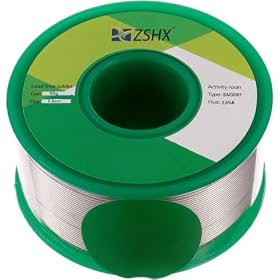
You may also need solder and flux if they are not included with the kit. Do not assume that a bundle’s extra tools are useful; a poorly made desoldering pump or flimsy stand should not outweigh the quality of the iron itself.
How to make an inexpensive iron work better
Before soldering the kit:
- Read the kit instructions and identify any heat-sensitive parts.
- Secure the board so it cannot move while you work.
- Heat the iron and apply a small amount of solder to the tip.
- Keep the tip tinned rather than leaving it bare.
- Heat the pad and component lead together, then feed solder into the joint—not onto the tip alone.
- Remove the solder and iron promptly once the joint is covered.
- Let the joint cool without moving the component.
- Clean and re-tin the tip before placing the iron in its stand.
Work in a ventilated area. Avoid breathing the visible fumes directly, and wash your hands after handling solder, especially solder containing lead. Follow local disposal and safety requirements.
Buy a cheap iron or a basic station?
Choose a cheap iron when the kit is simple, the work is truly one-time, and the iron still has a safe stand, usable tip, and predictable heating. Choose a basic temperature-controlled station when the kit uses small components, includes lead-free solder, contains static-sensitive parts, or you expect to build another project later.
The extra cost of a basic station can be worthwhile because it reduces troubleshooting caused by poor heat control. It may also be less expensive than replacing a damaged board or buying another iron after the first tip wears out.
When to replace the iron
Replace the iron or its tip if it cannot hold solder, takes unusually long to melt solder, has a damaged cord or handle, produces unstable heat, or has no available replacement tips. Stop using it immediately if the plug, cord, or housing shows damage. Electrical repairs to a mains-powered iron should be left to a qualified professional or handled according to the manufacturer’s service instructions.
For one small kit, you do not need a premium station. But a safe, temperature-controlled iron with replaceable tips is usually a better buy than the absolute cheapest fixed-temperature tool.