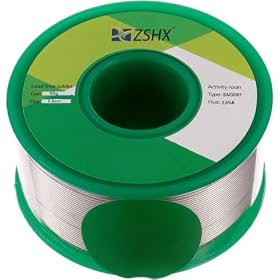
SAC305 is the common lead-free choice for electronics, while 63/37 remains easier to solder and is useful for repair, prototyping, and rework where lead is permitted. The key differences are melting temperature, wetting behavior, handling, and compliance requirements.
Lead-free SAC305 and 63/37 solder are both widely used for electronics, but they behave differently at the iron tip. SAC305 is the practical choice when you need lead-free or RoHS-oriented work. 63/37 is easier to use because it melts at a lower temperature, flows readily, and solidifies quickly at a precise temperature.
For most hobby repair and prototyping, the best choice depends first on whether lead is acceptable. If compliance is required, choose SAC305. If it is not, 63/37 is generally more forgiving for hand soldering.
SAC305 versus 63/37 at a glance
| Feature |
Lead-free SAC305 |
63/37 solder |
| Main composition |
96.5% tin, 3% silver, 0.5% copper |
63% tin, 37% lead |
| Melting behavior |
Melts at approximately 217–220°C |
Eutectic; melts at approximately 183°C |
| Typical hand-soldering feel |
Requires more heat and careful technique |
Easier flow and wetting |
| Lead content |
None by alloy composition |
Contains lead |
| Common reason to choose it |
Lead-free or compliance-sensitive work |
Easy prototyping, repair, and rework where permitted |
| Tip and joint demands |
More sensitive to oxidation and overheating |
Generally more forgiving |
Exact performance also depends on wire diameter, flux core, tip condition, board finish, component mass, and the soldering station—not just the alloy.
What SAC305 solder is
SAC305 is a lead-free tin-silver-copper alloy containing 96.5% tin, 3% silver, and 0.5% copper. It is one of the most common lead-free solders for electronics assembly.
Its melting range is much higher than 63/37 solder. That means the iron must transfer enough heat to bring the joint—not only the solder wire—to the required temperature. Large ground planes, connector shells, and other heat-dissipating parts can be difficult to solder if the station, tip, or technique is inadequate.
SAC305 can make reliable joints, but it usually benefits from:
- A temperature-controlled soldering station with adequate power
- A clean, properly tinned tip
- A tip size that transfers heat efficiently to the joint
- Fresh flux or a suitable flux-core solder
- Short contact time rather than prolonged heating
- Good board and component preparation
Lead-free solder may look duller than leaded solder after solidifying. A dull appearance alone does not prove that a joint is defective. Look instead for proper wetting, a sound connection, and the absence of cracks, bridges, or insufficient solder.
What 63/37 solder is
63/37 solder contains 63% tin and 37% lead. It is a eutectic alloy, meaning it changes from liquid to solid at approximately 183°C without passing through a broad pasty range.
That sharp transition is useful during hand soldering. The joint solidifies quickly once the heat is removed, reducing the chance of disturbing the connection while it is cooling. 63/37 also generally wets copper and common electronic finishes more easily than lead-free alternatives.
Its disadvantages are the lead content and the need for responsible handling. Leaded solder should not be used casually around food-contact items, and you should avoid eating, drinking, or touching your face while soldering. Wash your hands after handling solder and soldering residues, and follow workplace or local disposal requirements.
The biggest practical differences
Melting temperature and iron settings
63/37 melts at approximately 183°C, while SAC305 melts at approximately 217–220°C. In actual hand soldering, the iron must be set substantially higher than the alloy's melting point because heat is lost to the tip, pad, component lead, and surrounding copper.
Do not choose a single temperature solely from the alloy name. Start with the solder, station, tip, board, and component manufacturer's guidance. Use the lowest temperature that allows the joint to form promptly and correctly. Excessive temperature or long dwell time can lift pads, damage components, burn flux, and oxidize the tip.
A station that handles 63/37 comfortably may feel underpowered with SAC305, especially on large copper areas. Adequate wattage and good thermal recovery often matter as much as the displayed temperature.
Wetting and flow
63/37 is usually easier for beginners because it flows readily and wets clean surfaces with less heat. SAC305 can also wet well, but it is less forgiving of oxidation, contamination, insufficient heat, or weak flux activity.
If SAC305 beads up instead of flowing onto the pad and lead, check the tip, flux, surface cleanliness, and heat transfer before simply raising the temperature. More heat is not always the correct fix.
The pasty range
63/37 transitions quickly between liquid and solid. This makes it less likely to remain partially molten while the joint is moved.
Many common lead-free solders, including SAC305, pass through a temperature range between liquid and solid. Avoid moving the joint during this transition. Disturbing it can create a weak or visibly rough connection.
Reliability and use case
Both alloys can produce reliable electronic connections when used correctly. SAC305 is common where lead restrictions, environmental requirements, or manufacturing specifications call for lead-free assembly. 63/37 remains popular for repair, prototyping, and rework because its lower melting temperature and easy flow simplify the work.
The correct alloy is also a compatibility decision. If you are repairing an existing board, identify the soldering process or service requirements when possible. Mixing alloys is sometimes unavoidable during repair, but the resulting joint may not behave exactly like either original alloy, particularly during reflow or later rework.
Which solder should you choose?
Choose SAC305 when:
- The project requires lead-free solder
- You are following a RoHS-oriented assembly process
- The equipment, board, and components are specified for lead-free work
- You want to avoid adding lead to a repair environment
- The manufacturer or customer specifies a lead-free alloy
Choose the flux core and solder diameter carefully. SAC305 solder with a compatible no-clean or other specified flux can be much easier to use than a low-quality wire with weak or unsuitable flux.
Choose 63/37 when:
- Leaded solder is allowed for the project
- You want the easiest hand-soldering behavior
- You are doing hobby repair, learning, or prototyping
- A lower working temperature is helpful for the board or components
- You need fast, predictable solidification during rework
Do not substitute 63/37 where a customer, employer, product specification, or regulatory requirement calls for lead-free solder.
Flux matters with both alloys
Flux removes surface oxides and helps molten solder spread across the pad and lead. A suitable flux-core wire may be enough for many normal joints, but additional flux can help with oxidized surfaces, rework, connectors, ground planes, and lead-free soldering.
Use the flux type recommended for the board and cleanup process. No-clean flux residue is not automatically harmless in every application, and water-soluble flux generally requires thorough cleaning. Do not assume that adding more flux will compensate for a dirty surface, an unsuitable tip, or insufficient heat transfer.
If a joint will not wet, check these items in order:
- Is the pad or lead oxidized or contaminated?
- Is the tip clean and tinned?
- Is the tip large enough to transfer heat?
- Is the joint reaching the solder's working temperature?
- Is the flux fresh and appropriate?
- Are you heating the joint rather than melting solder only on the tip?
Safety and handling
Lead-free does not mean fume-free. Soldering flux can produce irritating fumes, so use local ventilation or a suitable fume extractor and avoid positioning your face directly over the work.
For 63/37 solder, wash your hands after soldering, keep solder and residue away from food and drinks, and prevent children or pets from contacting scraps. Do not sand, file, or mechanically abrade leaded solder unless you have appropriate controls for the resulting dust.
Follow the solder and flux safety data sheets, particularly for workplace use, cleaning chemicals, and waste disposal. For commercial or regulated products, follow the required material and process documentation rather than choosing an alloy based only on convenience.
Bottom line
SAC305 is the better choice when lead-free assembly or compliance is required, but it needs more heat, better thermal transfer, and more attention to flux and tip condition. 63/37 is generally easier for hand soldering because it melts at a lower temperature, wets readily, and solidifies sharply—but it contains lead.
If both are permitted and you are learning or repairing ordinary electronics, 63/37 is usually the more forgiving option. If the project specifies lead-free solder, use SAC305 and make sure your station, tip, flux, and technique are suitable for the higher working temperature.