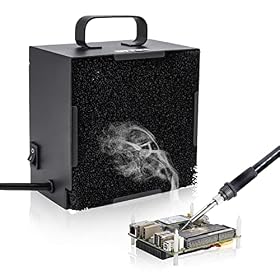
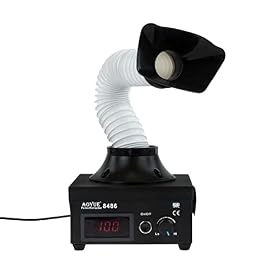
An open window can improve room ventilation, but it does not reliably capture soldering fumes at the source. A benchtop extractor is usually the more dependable choice for regular work—if it is positioned correctly and its filters are maintained.
Benchtop extractor versus an open window
For regular soldering, a benchtop fume extractor positioned close to the work is generally more dependable than relying on an open window. A window can help ventilate a room, but drafts and changing airflow may carry fumes across your breathing zone instead of outdoors. For occasional, brief soldering, an open window may help as part of a well-ventilated setup, but it is not equivalent to source capture.
What each option does
A benchtop extractor draws fumes away from the soldering point. Some models filter the air and return it to the room; others use a duct to discharge air outside. A recirculating unit depends on suitable, correctly installed filters, while a ducted unit depends on effective airflow and a safe discharge location.
An open window exchanges room air with outdoor air. How well that works depends on wind, the room layout, other open doors or windows, and whether air is actually moving out of the room. A window does not ensure that fumes are captured before they reach you.
Which should you choose?
Choose a benchtop extractor if you solder regularly, work close to the bench for extended periods, or cannot count on consistent airflow through the room. It is also the better fit when you want fumes drawn away from your face at the point where they form.
A window can be a useful supplement, particularly for short, occasional work when outdoor air can move through the room without blowing fumes toward you. It may be the only available option for a one-off task, but do not treat an open window as a reliable substitute for an extractor during frequent soldering.
If soldering is part of ongoing work, consider a ducted system or an appropriately filtered extractor based on the manufacturer’s guidance and your workplace requirements. Follow applicable safety rules; a small benchtop unit should not be assumed to replace required workplace ventilation.
Product prices and availability are accurate as of the date/time indicated and are subject to change. Any price and availability information displayed on Amazon.com at the time of purchase will apply to the purchase of this product.
How to choose a benchtop extractor
Check the air path: A ducted extractor moves air outside; a recirculating one returns filtered air to the room. Confirm which type you are buying and how it must be installed.
Look at capture distance and airflow guidance: Compare the manufacturer’s stated working distance and recommended placement with your bench. Airflow at the intake matters; a unit that is too far from the soldering point may not capture the plume effectively.
Check filter type and replacement availability: Filters have finite service life. Make sure replacement filters are available, and follow the maker’s instructions for replacement and disposal.
Consider noise and workspace fit: If the unit is distracting or blocks access to the work, it may be used inconsistently. Check its footprint, hose or arm arrangement, and noise information before choosing.
Product prices and availability are accurate as of the date/time indicated and are subject to change. Any price and availability information displayed on Amazon.com at the time of purchase will apply to the purchase of this product.
Set it up to draw fumes away from you
Place the intake near the soldering point, with the airflow pulling the plume away from your face—not across your breathing zone. Keep it close enough to capture fumes while leaving room to see and work safely. If using a window, check the direction of airflow with a light strip of tissue held near the work area; avoid placing yourself between the soldering point and the outlet path. Do not use a fan arrangement that blows fumes toward you or other people.
Keep the extractor’s intake unobstructed, and maintain filters as directed. If you can still see fumes drifting past your face, reposition the intake or improve the ventilation rather than assuming that the unit is working effectively.
Bottom line
An open window helps dilute room air when conditions are favorable, but it cannot guarantee capture at the soldering point. For routine soldering, a correctly positioned benchtop extractor—especially a ducted setup where appropriate—is the more reliable choice. Whichever approach you use, keep fumes out of your breathing zone and follow the equipment manufacturer’s instructions.
FAQ
Is an open window enough when soldering?
It may help ventilate a room during brief, occasional work, but airflow varies and may carry fumes across your breathing zone. For regular soldering, source capture with a properly positioned extractor is more dependable.
Should a soldering fume extractor vent outside?
A ducted unit can discharge air outdoors, while a recirculating unit filters and returns air to the room. Choose and install the system according to the manufacturer’s instructions and any workplace requirements.
Where should I place a benchtop soldering extractor?
Place its intake near the soldering point so it draws fumes away from your face. Keep it close enough to capture the plume without obstructing your work.
Do benchtop extractors need replacement filters?
Recirculating units use filters that need maintenance or replacement according to the manufacturer’s instructions. Check filter availability and replacement guidance before buying.