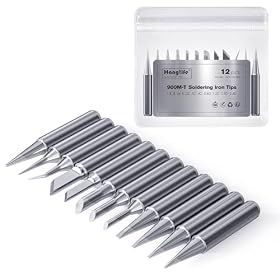
Brass shavings usually come off with gentle cleaning and fresh solder. Avoid scraping the tip; if solder no longer wets it, the tip may be damaged or worn out.
If brass shavings are stuck to a tinned soldering tip, gently clean the warm tip with brass wool, then apply fresh solder to restore its coating. Don’t scrape it with a blade, file, or abrasive pad. If solder still beads up instead of wetting the tip, the plating may be damaged and the tip may need replacing.
Remove the shavings and re-tin the tip
Keep the iron in its stand and follow the manufacturer’s instructions for cleaning at operating temperature. The tip is hot enough to burn skin or damage nearby surfaces.
Lightly wipe the tip through clean brass wool. Use gentle strokes rather than pressing hard or twisting the tip into the cleaner; force can damage the tip’s protective plating.
Feed fresh solder onto the cleaned tip so it forms a thin, shiny coating. This is called re-tinning and helps protect the tip from oxidation.
If bits remain, repeat the gentle wipe and re-tin. Let the tip cool before inspecting it closely, and never handle it while hot.
Use brass wool intended for soldering-iron tip cleaning. Don’t use steel wool, sandpaper, a knife, or a file. These can scratch through the plated surface and shorten the tip’s life.
Check why the shavings stuck
Brass wool naturally sheds small particles, especially when it is worn, dirty, or pressed against the tip too hard. Replace the cleaner if it is breaking down or contaminated with solder and debris. A clean, loosely packed brass cleaner is less likely to leave material behind.
Also check that you are using the cleaner as directed for your iron. Some stations have specific cleaning instructions, and the tip should not be left uncoated after cleaning. If the tip is difficult to wet with solder, use a tip-cleaning product approved by the iron’s manufacturer rather than trying to scrape it clean.
Product prices and availability are accurate as of the date/time indicated and are subject to change. Any price and availability information displayed on Amazon.com at the time of purchase will apply to the purchase of this product.
Know when the tip needs replacing
After cleaning, a usable tip should accept solder across its working surface. If solder repeatedly beads up, or you see deep pits, flaking, or exposed copper, the tip may be oxidized beyond recovery or its plating may be damaged. Replace it with a tip compatible with your iron or station; tip shapes and fit are not universal.
If the problem continues with a new, correctly fitted tip, check the station’s instructions for temperature and setup before assuming the iron has failed. Unplug the equipment before changing parts, and consult the manufacturer or a qualified repair professional if the station appears damaged or behaves abnormally.
Product prices and availability are accurate as of the date/time indicated and are subject to change. Any price and availability information displayed on Amazon.com at the time of purchase will apply to the purchase of this product.
FAQ
Can brass wool damage a soldering tip?
Brass wool made for tip cleaning is generally intended for this purpose, but pressing hard or using a worn, contaminated cleaner can damage the tip’s protective plating. Use gentle strokes and follow the iron manufacturer’s instructions.
Should I use a wet sponge instead?
Use the cleaning method recommended for your iron and tip. Brass wool and damp sponges are both used for tip cleaning, but instructions can vary. Whichever method you use, re-tin the tip afterward.
What if solder beads up after I remove the shavings?
Try the manufacturer-approved tip-cleaning procedure and apply fresh solder. If solder still will not wet the working surface, or the tip is pitted or flaking, replace the tip with a compatible one.