Conductive glue can repair some broken circuit-board traces, but it is usually a niche alternative—not a drop-in replacement for solder. Silver-filled conductive epoxy or ink may work for a low-current trace when soldering could damage the board or the copper is too fragile. If you can reach sound copper on both sides of the break, a soldered wire jumper is generally easier to inspect and more dependable.
Comparisons · Tue Sep 22
Conductive glue as an alternative for a broken trace
Conductive adhesive can bridge some broken PCB traces, especially where heat from soldering is a concern. For most accessible copper traces, a soldered jumper is usually the more dependable repair.
When conductive glue makes sense
Conductive adhesive may be worth considering when the board is heat-sensitive, the trace is extremely delicate, or soldering is impractical. Use a product specifically intended for electrical connections; ordinary household glue does not conduct electricity.
Check the adhesive’s instructions and technical information before buying. Conductive adhesives can have more electrical resistance than copper, and the result depends on the product, application, surface preparation, and curing conditions. Confirm that it is suitable for the board material, the trace’s current, and any movement or flexing the repair will experience. A product intended for a static repair may not hold up on a flexing circuit.
Avoid relying on an adhesive repair for mains-voltage circuits, high-current paths, safety-critical equipment, or a board exposed to significant heat or vibration unless the product and repair method are specifically rated for that use.
Conductive adhesive for low-heat PCB repairs
 Conductive Silver Paste, Silver Paste Conductive Electrically Paste Adhesive Paint Electronic Soldering Welding Tool for…Fafeicy
$8.99 as of
View on Amazon 5 pieces 0.3ML Silver Conductive Wire Glue Paste For Electronics Repair Applicationswellie-store
$25.64 as of
View on Amazon Silver Conductive Epoxy Adhesive, Silver Conductive Paste, Adhesive Silver Paint Pen for Repair Keyboard Electronic…SYH&AQYE
$13.49 as of
View on Amazon
Product prices and availability are accurate as of the date/time indicated and are subject to change. Any price and availability information displayed on Amazon.com at the time of purchase will apply to the purchase of this product.
When a soldered jumper is the better choice
For a typical accessible PCB trace, a short insulated wire soldered to intact copper at either end of the break is often the more practical repair. It creates a visible connection and avoids depending on an adhesive layer to carry current. Use an appropriately sized wire and soldering technique for the circuit, and avoid bridging neighboring traces.
A jumper is not automatically suitable for every board. If the copper is lifting, pads are damaged, components are densely packed, or you cannot identify the trace endpoints, stop before applying heat. Further damage can make the board harder to repair; a repair technician may be the safer option.
Wire for a soldered trace jumper
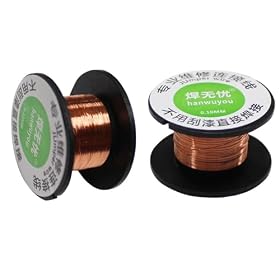 2Pcs 0.1mm Thin Insulation Copper Soldering Wire Motherboard Repair ToolsLouishy
$6.59 as of
View on Amazon SOLDERISE 0.3mm Lead Free Solder Wire, Fine Thin Rosin Core Solder for Electronics, Flux Core…SOLDERISE
$9.99 as of
View on Amazon E ENERSYSTEC Thin Solder Wire 0.4mm Lead Free Electronics Solder Wire Rosin Core Sn99 Ag0.3…E ENERSYSTEC
$15.99 as of
View on Amazon
Product prices and availability are accurate as of the date/time indicated and are subject to change. Any price and availability information displayed on Amazon.com at the time of purchase will apply to the purchase of this product.
How to apply conductive adhesive carefully
- Disconnect power. Remove batteries or unplug the device. Do not work on an energized board, and follow the equipment manufacturer’s service instructions.
- Locate the break and endpoints. Use the board layout or a multimeter’s continuity function to identify the same trace on both sides. If you are not certain which points connect, do not guess.
- Prepare only the repair area. Follow the adhesive maker’s directions for cleaning and exposing copper. Avoid scraping deeply, since that can sever the trace or damage layers inside the board.
- Apply a small, controlled amount. Bridge the break without touching adjacent traces, component leads, or exposed metal. Keep the repair as narrow as the product instructions allow.
- Let it cure fully. Follow the specified cure time and conditions; a surface that feels dry may not be ready to conduct reliably.
- Inspect and check continuity. With power still disconnected, look for stray adhesive and verify the intended connection. Also check that the repair has not created a connection to a neighboring trace.
If the adhesive spreads across nearby conductors, the trace ends are badly damaged, or the connection remains unreliable after curing, remove or redo the repair only as the product instructions allow. For a board that matters to safe operation, have a qualified repairer assess it.
Choosing between adhesive and solder
Choose conductive adhesive when minimizing heat is important and the product is suitable for the electrical and mechanical demands of the repair. Choose a soldered jumper when the trace is accessible, the board can tolerate soldering, and you can make a clean connection to intact copper. If neither method can be done without risking adjacent parts or internal board layers, replacing the board or seeking professional repair may be more reasonable than improvising.
FAQ
Does conductive glue work on a broken circuit-board trace?
It can work when the adhesive is designed for electrical repairs, the trace carries an appropriate current, and the copper ends are prepared and cured as directed. Results vary by product and application, so verify continuity after curing.
Is conductive glue better than solder for a PCB trace?
Usually not for an accessible copper trace. A soldered wire jumper is often more dependable and easier to inspect. Conductive adhesive is mainly an alternative when soldering heat or access is a concern.
Can I use ordinary super glue to repair a trace?
No. Ordinary super glue is not electrically conductive. Use a product explicitly made for electrical connections, or use a suitable soldered repair.
Can conductive adhesive repair a high-current trace?
Do not assume it can. Adhesive resistance and current capacity vary, and a failed repair can overheat or damage equipment. Use only a product and repair method rated for the circuit, or consult a qualified technician.