Crimp connectors can replace solder for many wire-to-wire connections. A properly matched connector and crimping tool make a mechanical and electrical connection without heating the wire. Crimping is often convenient for stranded wire and wiring that may move, but it is not a universal substitute: the connector must match the wire and application, and some electronics connections still call for solder.
Use Cases · Wed Sep 23
Crimp Connectors Instead of Soldering Wires
Crimping is often a practical alternative to soldering for wire-to-wire connections, especially in harnesses and places subject to movement. The right choice depends on the connector, wire, tool, and application.
When to crimp instead of soldering
Crimping is a good option for joining wires in a harness, adding a terminal, or making a repair where using a soldering iron would be awkward. It can also be useful where flexibility matters: solder can wick into stranded wire and leave a stiffer section next to the joint, which may be more prone to fatigue if it repeatedly bends.
Choose a crimp when:
- The connector is designed for the wire type and gauge.
- You have a crimping tool with the correct die for that connector.
- The connection needs to be made without applying heat near nearby insulation or components.
- The product or equipment instructions specify a crimp connection.
A heat-shrink crimp connector can add insulation and help protect a splice from moisture, but the heat-shrink sleeve does not make a poor crimp electrically reliable. The underlying crimp still has to be correct.
Crimp connectors for electronics wiring
 90 Pcs Butt Splice Connectors Kit 22-10 AWG Electrical Crimp Terminal Connector Kits Assorted Butt…LordandLand
$5.99 as of
View on Amazon AIRIC Wire Butt Splice Connectors Kit Insulated Electrical Crimp TerminalAIRIC
$9.99 as of
View on Amazon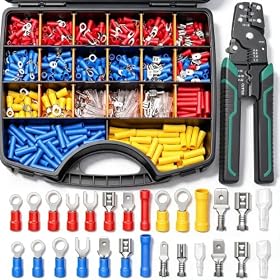 Twidec/1100pcs Wire Connectors Kit,Insulated Electrical Wire Terminals,Waterproof Crimp Connector kit Includes Spade Fork Ring Bullet…Twidec
$29.99 as of
View on Amazon
Product prices and availability are accurate as of the date/time indicated and are subject to change. Any price and availability information displayed on Amazon.com at the time of purchase will apply to the purchase of this product.
When soldering is still the better option
Soldering is usually the appropriate method for joining components to a circuit board or making connections designed for solder. It can also suit some wire splices when the wire, joint design, and equipment instructions permit it and the finished joint can be supported against movement.
Do not substitute a crimp terminal for a soldered board connection unless the design provides a suitable crimp contact. Likewise, avoid putting solder-coated stranded wire under a screw terminal unless its manufacturer allows it; solder can deform under pressure and the connection may loosen.
For mains wiring, vehicle safety systems, or other regulated or safety-critical work, follow the applicable product instructions and requirements. If you are unsure which connection method is approved, consult a qualified professional rather than improvising.
Crimping tool for wire terminals
 DINGYUAN Heat Shrink Butt Connectors, Crimp and Solder, 16-14 AWG, 100PCSDINGYUAN
$65.98 as of
View on Amazon YNZDRWA 200PCS Solder Seal Wire Connectors Kit, Heat Shrink Butt ConnectorsYNZDRWA
$7.18 as of
View on Amazon DINGYUAN Heat Shrink Butt Connectors, Crimp and Solder, 22-18 AWG, 10PCSDINGYUAN
$9.58 as of
View on Amazon
Product prices and availability are accurate as of the date/time indicated and are subject to change. Any price and availability information displayed on Amazon.com at the time of purchase will apply to the purchase of this product.
How to make a reliable crimp
- Match the parts. Check the connector’s specified wire gauge, conductor type, and intended use. Do not assume a connector fits just because the wire enters it.
- Use the correct tool. Match the crimper and die to the connector style. Pliers or an unrelated crimp die may flatten the connector without forming a dependable connection.
- Strip the specified length. Avoid nicking or cutting strands. Insert the conductor so the stripped section sits where the connector is designed to grip it; keep insulation out of the conductor crimp area.
- Crimp in the intended position. Follow the connector and tool instructions, including which part of the terminal to crimp. For a ratcheting tool, let the cycle complete as directed.
- Inspect and tug gently. Check that the conductor is captured, no loose strands are exposed, and the insulation is not damaged. A gentle pull can reveal a loose connection; it does not replace any inspection or test required for the application.
Common crimp problems and fixes
- The wire pulls out: Confirm the wire gauge and connector match, strip to the correct length, and use the specified die. Replace a damaged terminal instead of crimping it again over the old deformation.
- The connector looks crushed or split: The tool or die may be wrong, or the terminal may be in the wrong position. Stop and check the instructions before making another connection.
- Loose strands stick out: Remove the terminal, trim and restrip the wire if needed, then make a new crimp. Do not leave stray strands where they could touch another conductor.
- The splice is exposed to movement or moisture: Use a connector intended for those conditions and provide strain relief or an appropriate seal. A heat-shrink sleeve alone cannot correct a weak connection.
If the tool cannot make the specified crimp, or the connector and wire are damaged, replace the affected part. If a correct crimp still fails inspection or the application’s required test, stop using the connection and seek qualified help.
FAQ
Are crimp connectors as reliable as solder?
Either method can make a reliable connection when used as intended. Reliability depends on choosing the right connector or solder joint design, following the instructions, and making and inspecting the connection correctly.
Can I crimp wires with regular pliers?
Do not rely on ordinary pliers for a crimp connection. Use a crimping tool and die intended for the connector; pliers may deform the terminal without gripping the conductor properly.
Should I solder a crimp connector after crimping it?
Usually, no. Use the connector as designed rather than adding solder unless its manufacturer or the equipment instructions specifically call for it. Extra solder can change how the connection flexes and may interfere with the intended joint.