Soldering connects electronic components by heating a metal pad and component lead, then feeding solder into the joint. The solder melts, flows over both clean surfaces, and hardens as it cools, creating an electrical connection and a physical bond. The iron supplies heat; the solder should melt from contact with the heated joint, not simply from touching the iron tip.
How It Works · Sun Sep 13
How Soldering Works on Electronics
Soldering joins electronic parts by heating the pad and component lead so molten solder can wet both surfaces and form a connection as it cools.
What happens during soldering
A soldering iron transfers heat through its tip to the copper pad and the component lead. Once both are hot enough, solder touching them melts and spreads across their surfaces. This spreading, called wetting, is what helps create a dependable joint.
Flux, often included in solder or applied separately, helps remove surface oxides and improves wetting. After you remove the iron, the solder cools and solidifies. The result should connect the parts electrically without bridging to nearby pads or leaving the component loose.
Solder does not usually make a strong connection to dirty, oxidized, or inadequately heated surfaces. Adding more solder may hide the problem rather than fix it.
Electronics solder for circuit-board work
 MAIYUM 63-37 Rosin Core Solder Wire 0.8mm 50g Tin Lead Electrical SolderingMAIYUM
$8.99 as of
View on Amazon TOWOT 63-37 High Purity Tin Lead Rosin Core Solder Wire for Electrical Soldering, Content 1.8%…TOWOT
$6.47 as of
View on Amazon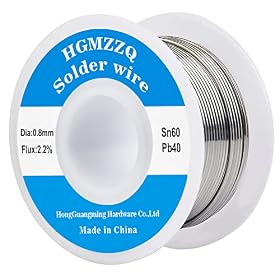 HGMZZQ 60/40 Tin Lead Solder Wire with Rosin core for Electrical Soldering 0.031 inch(0.8mm-50g)HGMZZQ
$9.99 as of
View on Amazon
Product prices and availability are accurate as of the date/time indicated and are subject to change. Any price and availability information displayed on Amazon.com at the time of purchase will apply to the purchase of this product.
How to make a basic electronics solder joint
- Make the circuit safe to work on. Disconnect power and, where appropriate, batteries. Let hot components cool before handling them.
- Prepare the parts. Keep the pad and lead clean and positioned so they will not move while the solder cools. Use the correct tip shape and size for the work.
- Heat the joint. Place the iron tip so it touches both the pad and the lead. A clean, lightly tinned tip helps transfer heat.
- Feed solder to the joint. Touch solder to the heated pad-and-lead junction. If the joint is hot enough and clean, solder should melt and flow over it.
- Remove solder, then the iron. Stop feeding when the joint is covered without excess, then lift the iron away. Keep the parts still until the solder has solidified.
- Inspect the connection. Check that solder joins the lead and pad, and that it has not bridged to neighboring pads. If the joint is incomplete, reheat it and add a small amount of solder rather than piling on more.
The exact iron temperature depends on the solder, the tip, and the size and heat capacity of the parts. Follow the solder and station manufacturers’ guidance; use enough heat to form the joint promptly without lingering on delicate pads or components.
Temperature-controlled equipment for electronics soldering
 WEP 926LED V3 Soldering Station 130W MAX Soldering Iron Kit with Solder Wire, 5 Soldering…WEP
$27.99 as of
View on Amazon Soldering Station, 100W Digital Display Soldering Iron Station Kit with 2 Helping Hands, 356°F -…Crtsweker
$29.99 as of
View on Amazon WEP 882D Soldering Iron Station 2-IN-1 SMD Hot Air Rework Station with 2 Spools of…WEP
$59.99 as of
View on Amazon
Product prices and availability are accurate as of the date/time indicated and are subject to change. Any price and availability information displayed on Amazon.com at the time of purchase will apply to the purchase of this product.
What a good joint looks like
A reliable joint has solder that has flowed onto both the pad and the lead. The lead should not move within the joint, and nearby pads should remain separate. Appearance alone is not a perfect test: solder alloys and surface finishes can look different, so confirm that the solder has wetted both surfaces rather than judging only by shine.
A cold or poorly wetted joint may look uneven, sit in a blob, or fail to bond to one surface. Common causes include a dirty tip, oxidized surfaces, movement while cooling, or heating only the lead or pad instead of both.
Choose solder and flux for the job
Electronics solder is available in different alloys and diameters. The alloy affects melting behavior and the appearance of the finished joint; the diameter affects how much solder you feed at a time. Fine work is generally easier to control with thinner solder, while larger joints may need a thicker diameter. Check that the solder is intended for electronics.
Lead-free solder is common and may require different handling or settings than leaded solder. Use the solder maker’s instructions rather than assuming one temperature works for every alloy. Do not use acid-core plumbing solder on electronics; its residue can damage connections. Use electronics-grade flux when additional flux is needed.
Safety and cleanup
Work with ventilation or local fume extraction to control flux fumes. Avoid breathing fumes directly, keep the hot iron in a stable stand, and treat the tip and freshly soldered parts as burn hazards. Follow the iron, solder, and flux manufacturers’ safety instructions.
Wash your hands after handling solder or flux, especially if using leaded solder, and keep food and drinks away from the work area. Clean residues only as directed for the flux you used; some fluxes are intended to remain, while others require cleaning.
FAQ
Does solder conduct electricity?
Yes. Solder forms an electrically conductive connection between the joined metal surfaces, but it should not replace the intended mechanical contact or circuit layout.
Why does solder stick to the iron but not the circuit board?
The iron tip may be heating only one part of the joint, or the pad or lead may be dirty or oxidized. Clean and tin the tip, then heat both the pad and lead before feeding solder to their junction.
Should solder melt on the iron tip or on the joint?
For a normal joint, solder should melt when it touches the heated pad and component lead. A small amount on the tip can help transfer heat, but melting solder on the tip alone does not ensure the joint surfaces are hot enough.
Can I use plumbing solder for electronics?
No. Plumbing solder may contain acid-based flux that can corrode or damage electronic connections. Use solder and flux labeled for electronics.