Kapton tape can help shield or mask nearby areas during soldering, but it is not a substitute for a better-matched tip. It may reduce incidental contact with a surface; it cannot deliver heat to the joint more efficiently, and it should not be relied on to withstand direct contact with a soldering iron. If the problem is slow soldering or excessive dwell time, start by choosing the right tip and setting up the joint correctly.
Use Cases · Mon Sep 21
Kapton tape as a heat shield alternative to a better tip
Kapton tape can mask or protect nearby surfaces during soldering, but it does not replace the faster, more controlled heat transfer of a correctly sized tip. Use it as a limited aid, not as a barrier for direct iron contact.
What Kapton tape can—and cannot—do
Kapton is a brand name for polyimide film. Soldering-grade tapes can be useful for temporarily masking nearby areas or holding a light barrier in place. Their heat resistance depends on the specific tape and adhesive, so check the manufacturer's temperature and use instructions rather than assuming all Kapton tape behaves the same.
Tape is thin and is not a substantial thermal shield. It may help protect a surface from brief, incidental contact, but it will not reliably stop heat conducted through a board, component lead, or metal shield. Adhesive can also soften or leave residue, particularly if it is heated beyond its rating or left in place too long.
Do not put tape where the iron tip will touch it, use it to cover the solder joint, or treat it as protection against direct iron contact. Keep it clear of pads and leads that need soldering, and do not use it as electrical insulation unless the product is specifically rated for that purpose and the application follows its instructions.
Temporary masking and incidental-contact protection
 MYJOR Kapton Tape Heat Resistant, Polyimide Tape 20mm x 33m x 2 Rolls, GoldMYJOR
$11.99 as of
View on Amazon Cuziss High Temp Tape, Kapton Tape with Silicone Adhesive for Masking Soldering 3D Printing -…LUTIONS
$6.99 as of
View on Amazon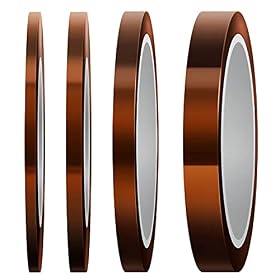 Luter 4 Rolls of Heat Resistant Tape High Temperature Polyimide Adhesive Tape for Sublimation, 3D…LUTER
$8.99 as of
View on Amazon
Product prices and availability are accurate as of the date/time indicated and are subject to change. Any price and availability information displayed on Amazon.com at the time of purchase will apply to the purchase of this product.
When a better tip is the better solution
If a joint takes too long to heat, the tip may be too small or have a shape that does not make good contact. A suitable chisel or bevel tip often transfers heat more effectively to a broad pad than a fine conical tip, while a narrow tip can be useful for tight access. Choose a shape and size that can contact the joint without touching neighboring parts.
Before adding shielding, check the basics:
- Clean and tin the tip, and replace it if its working surface is damaged or will not wet with solder.
- Use a tip with enough contact area for the joint; do not compensate for a poorly matched tip by holding the iron on the board longer.
- Confirm that the station's temperature is appropriate for the solder, joint, and component, following the equipment and component makers' guidance.
- Make sure the pad and lead are clean and that you are using suitable flux.
A correctly matched tip and good contact usually make a more direct difference to heating time than tape. Raising the temperature is not always the answer; excessive heat or prolonged contact can damage pads and components.
A tip better matched to the joint
 PNECK 900M Soldering Iron Tips 12 Pcs, Replacement Solder Tips Compatible with HAKKO, Atten, Quick,…PNECK
$8.79 as of
View on Amazon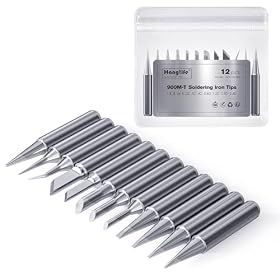 HANGLIFE 900M Soldering Iron Tips for Hakko, Yihua, Atten, Quick, Ryobi, and More Soldering Stations/Guns…Hanglife
$11.99 as of
View on Amazon YIHUA #1401 Soldering Iron Tips Set (6PCS) Long-Life Type for YIHUA 926LED-III(110W,Red), 939D+ III EVO,…YIHUA
$13.99 as of
View on Amazon
Product prices and availability are accurate as of the date/time indicated and are subject to change. Any price and availability information displayed on Amazon.com at the time of purchase will apply to the purchase of this product.
How to use tape as a limited heat shield
If you need to protect an adjacent area from accidental contact or solder splashes, use tape rated for the conditions and follow its product instructions:
- Turn off the iron and let the work area cool before applying tape.
- Apply a small piece to a clean, dry surface, keeping it away from the target pad, lead, and joint.
- Keep the tape out of the iron's path and avoid wrapping components or covering areas that need heat to escape.
- Remove it after the board has cooled, unless the tape instructions specify another safe method.
For a heat-sensitive component lead, a properly positioned heat-sink clip may be more appropriate than tape. It must not interfere with the joint or create a short. Use extra caution around conductive shields, exposed circuitry, and powered equipment; switch off and disconnect power before soldering, and follow the device maker's repair guidance.
Choose based on the problem
Use Kapton tape when you need temporary masking or a limited barrier against incidental contact, and the tape's stated rating suits the job. Choose a better-matched tip when the issue is poor heat transfer, slow joints, or needing to hold the iron on the board too long. For sensitive components, consider a suitable heat sink and follow the component manufacturer's guidance. Tape can complement good technique, but it cannot make an unsuitable tip safe or effective.
FAQ
Can Kapton tape protect a circuit board from a soldering iron?
It may help protect an area from brief, incidental contact if the tape is rated for the conditions. Do not rely on it to withstand direct contact with the iron tip or to prevent heat from traveling through the board or a component lead.
Is Kapton tape better than a small soldering tip?
They serve different purposes. Tape can mask or shield nearby areas, while a correctly sized tip improves heat transfer to the joint. If soldering is slow or requires long contact, assess the tip shape and size first.
Can I leave Kapton tape on a board while soldering?
Only if the specific tape's instructions and temperature rating suit the work. Keep it away from the tip and joint, and remove it after the board cools if appropriate.