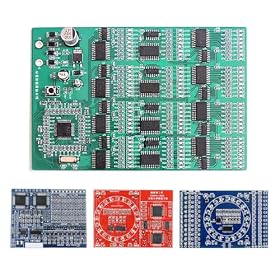
Paying a Board House Instead of Hand-Soldering a First SMD Run
For a first SMD run, outsourcing can save time and reduce assembly mistakes—but setup fees, lead time, and design readiness matter. Here’s how to decide before you request a quote.
Paying a board house instead of hand-soldering a first SMD run
Paying a board house to assemble a first SMD run makes sense when repeatable assembly, time savings, or fine-pitch parts matter more than keeping every cost in-house. Hand-soldering is often the better choice for a very small, simple prototype that may change soon. Compare the full quote and schedule with the value of your time—not just the per-board price.
What you’re paying for
A board house may provide PCB fabrication, component sourcing, assembly, inspection, and shipping as one service, or quote only some of those steps. Check exactly what is included. “Assembly” does not always mean the board, parts, stencil, and shipping are all covered.
The quote may depend on the board quantity, number of unique components, package types, sourcing availability, panelization, and whether the shop must prepare or verify your files. Setup or engineering charges can make a small order look expensive per board. Conversely, buying components yourself can add shipping, minimum-order quantities, and time spent managing shortages.
Ask whether the quote includes:
PCB fabrication and assembly, or assembly only
Component sourcing, including any substitutions for unavailable parts
Stencil, setup, inspection, and programming or feeder charges, if applicable
Treatment of parts you supply and any required overage
Shipping, taxes, and the quoted production lead time
Rework or replacement terms for boards with assembly defects
Compare quotes on the same basis. A lower assembly charge may exclude sourcing, setup, or other costs.
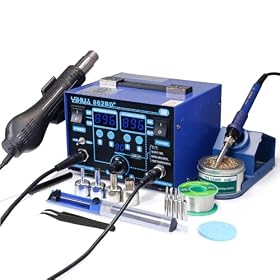
Tools for hand-assembling or reworking SMD prototypes
Product prices and availability are accurate as of the date/time indicated and are subject to change. Any price and availability information displayed on Amazon.com at the time of purchase will apply to the purchase of this product.
When outsourcing makes sense
Outsourcing is worth considering when the board has fine-pitch components, many small parts, parts that are difficult to hand-place, or enough units that hand assembly would consume substantial time. It can also be a practical way to get more consistent assembly across a batch.
It is a weaker fit if the design is still changing, parts are unavailable, or you only need a couple of boards and can assemble them comfortably. If a design change is likely, paying for a batch before validating the circuit can turn avoidable rework into scrap. Consider assembling one prototype first, or ordering a smaller pilot quantity if the shop offers it.
Close inspection while placing and soldering small components
Product prices and availability are accurate as of the date/time indicated and are subject to change. Any price and availability information displayed on Amazon.com at the time of purchase will apply to the purchase of this product.
What to prepare before requesting a quote
Send the assembler the files and details it requests; requirements vary by shop. Common items include fabrication files, a bill of materials (BOM), pick-and-place or centroid data, and assembly drawings showing component orientation and any parts that should not be populated.
Before submitting, check that:
BOM part numbers match the footprints and values in the design
Each reference designator appears once and maps to the correct component
Polarity and pin-one markings are clear for polarized or orientation-sensitive parts
The assembly file uses the coordinate format and units the shop expects
Special instructions identify do-not-populate parts, substitutions, or parts you will supply
Ask the assembler to review unclear parts or file mismatches before production. A quick clarification is usually preferable to guessing after the board is built.
Compare total cost and risk—not only unit price
Estimate the hand-soldering option using the number of boards, assembly time per board, consumables, and any tools you still need to buy. Include the possibility of rework or damaged parts, but don’t assume every hand-built board will fail. For outsourcing, add all quoted setup, sourcing, shipping, and other charges, then check the schedule and defect or rework policy.
The value of your time depends on what you would do with it. If hand assembly would delay firmware work, testing, or a deadline, outsourcing may be worthwhile even when the cash cost is higher. If assembly is a useful skill-building step and the board is simple, doing it yourself may be the more sensible choice.
A practical decision rule
Choose hand-soldering when the batch is tiny, the design is likely to change, the parts are manageable, and you have the tools and time. Choose a board house when the design is stable, assembly is intricate or repetitive, or your time is better spent validating the product.
For an uncertain first run, reduce risk by validating the design before committing to a larger batch. You can also ask for a quote at more than one quantity and compare the total—not just the per-board figure—to see how setup costs affect the decision.
FAQ
Is a board house worth it for only a few SMD boards?
It depends on setup charges, the parts and package types, and how long hand assembly would take. Request a complete quote for your actual quantity, then compare it with your time, tools, and likely rework needs.
What files does a PCB assembler usually need?
Requirements vary, but common files include fabrication data, a BOM, pick-and-place or centroid data, and assembly drawings. Confirm the shop’s formats, units, and instructions before submitting.
Should I hand-solder a prototype before outsourcing a batch?
That can be a good choice if the design has not been validated or may change. A hand-built prototype can help catch circuit or layout problems before you pay to assemble multiple boards.