A station’s wattage and its thermal recovery are related, but they are not the same thing. Wattage indicates how much electrical power the station can supply; thermal recovery is how effectively it restores tip temperature when a joint draws heat. For choosing a station, recovery under the kind of work you do matters more than wattage alone.
Wattage & Tips · Mon Sep 14
Wattage vs. Thermal Recovery on a Soldering Station
Wattage describes available electrical power; thermal recovery describes how well the station keeps the tip near its set temperature while soldering. The design of the heater, tip, and control system affects both.
What wattage means
Wattage is a measure of electrical power. On a soldering station, the advertised figure may describe the station’s maximum output or the heater’s rated power, depending on the manufacturer. Check the product documentation to see what the number refers to.
More available power can help a station respond to heat loss, but it does not guarantee that the tip will heat faster or hold temperature better. Heater design, how closely the temperature sensor reflects the tip temperature, and the station’s control system all influence performance.
Soldering stations with strong temperature control for electronics work
 WEP 926LED V3 Soldering Station 130W MAX Soldering Iron Kit with Solder Wire, 5 Soldering…WEP
$27.99 as of
View on Amazon Soldering Station, 100W Digital Display Soldering Iron Station Kit with 2 Helping Hands, 356°F -…Crtsweker
$29.99 as of
View on Amazon WEP 882D Soldering Iron Station 2-IN-1 SMD Hot Air Rework Station with 2 Spools of…WEP
$59.99 as of
View on Amazon
Product prices and availability are accurate as of the date/time indicated and are subject to change. Any price and availability information displayed on Amazon.com at the time of purchase will apply to the purchase of this product.
What thermal recovery means
When a hot tip touches a pad, wire, or component lead, heat flows from the tip into the work. The tip cools, and the station responds by supplying heat to bring it back toward the set temperature. Thermal recovery describes how well it handles that process.
A station with effective recovery can maintain a more consistent working temperature through repeated joints or joints that draw more heat. Recovery is not always reported as a standard specification, so manufacturer descriptions and credible independent evaluations may be more useful than comparing wattage figures alone.
Compatible replacement tips for common electronics soldering tasks
 YIHUA #1200 Soldering Iron Tips Set 10PCS Long-Life Type Fit for YIHUA SGS Certified Lead-Free…YIHUA
$15.99 as of
View on Amazon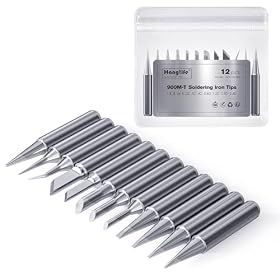 HANGLIFE 900M Soldering Iron Tips for Hakko, Yihua, Atten, Quick, Ryobi, and More Soldering Stations/Guns…Hanglife
$11.99 as of
View on Amazon HANGLIFE ET Soldering Iron Tips for Weller WE1010NA WE1010EDU WES51/50 WESD51 WCC101 PES51/50 WEP70 LR21…Hanglife
$19.99 as of
View on Amazon
Product prices and availability are accurate as of the date/time indicated and are subject to change. Any price and availability information displayed on Amazon.com at the time of purchase will apply to the purchase of this product.
What affects recovery in practice
- Tip size and shape: A tip with enough contact area and thermal mass for the joint transfers heat more effectively. A very fine tip may struggle on a large connection, even with a powerful station.
- Heater and sensor design: The heater’s placement and the sensor’s ability to track tip temperature affect how quickly the station can respond to cooling.
- Control system: The station must detect temperature changes and adjust heater output effectively.
- Workpiece and joint: Large metal parts, ground planes, and heavy wires draw more heat than small signal joints.
- Tip condition: Oxidation, poor tinning, or a worn tip can reduce heat transfer. Raising the set temperature is not a reliable fix for a damaged or unsuitable tip.
How to choose between stations
Start with the work you do most often. For small electronics joints, a well-designed station with an appropriate fine or medium tip may be more useful than a higher wattage number paired with a poorly matched tip. For larger connectors, heavy wires, or connections to substantial copper areas, prioritize a station and tip system designed to maintain heat under heavier loads.
Compare stations using the manufacturer’s definition of wattage, the supported tip range, temperature control features, and information about recovery. If independent evaluations are available, look for how the station behaves during sustained or repeated soldering—not just how quickly it reaches its set temperature from cold.
Also check tip availability and compatibility before buying. A station may have plenty of power but be a poor fit if it lacks tips suited to your work or replacement tips are difficult to source.
Practical signs that recovery or heat transfer is inadequate
If soldering becomes slow or inconsistent, first use a clean, properly tinned tip with enough contact area for the joint. Confirm the station is set up according to its instructions and that the tip is compatible and seated correctly. If the tip still cools noticeably during ordinary work, the station may be undersized for that task, or its heater, sensor, or tip may need service or replacement.
Do not compensate automatically by turning the temperature much higher. Excessive heat can damage pads and components. Follow the station and component manufacturers’ guidance, and disconnect the equipment before inspecting or changing parts where instructed.
FAQ
Does a higher-wattage soldering station always heat faster?
No. Wattage indicates available electrical power, but warm-up time also depends on heater design, tip construction, and temperature control. Compare the manufacturer’s warm-up information if that matters to your work.
Is thermal recovery more important than wattage?
For work that repeatedly draws heat from the tip, recovery is often the more useful performance question. Wattage can help indicate available power, but it does not describe how effectively the station maintains tip temperature under load.
Why does my soldering tip cool down on a large joint?
The joint may draw more heat than the tip can transfer efficiently. Try a clean, suitable tip with more contact area, and check that the station is operating and configured correctly. If the issue persists on work within the station’s intended use, consult its manual or service guidance.
Should I raise the temperature to improve recovery?
Not as a first step. Check tip condition, tinning, size, and contact with the joint. A higher setting may not solve poor heat transfer and can increase the risk of damaging components or pads.