What Wattage Soldering Iron Do You Need for Electronics?
For most electronics work, choose a temperature-controlled soldering iron or station rated around 40–60 watts. Higher wattage can help a tool recover heat faster on larger joints; it does not automatically mean the iron runs hotter.
Quick answer
For most electronics work, a 40–60-watt temperature-controlled soldering iron or station is a practical choice. It has enough capacity for common circuit-board joints while giving you control over the tip temperature.
A lower-wattage iron can work for small, occasional jobs, but may struggle to keep heat flowing into larger joints. For heavy connectors, ground planes, or other parts that draw heat away quickly, a higher-capacity station—often in the 60–80-watt range or above—can recover heat faster. Use the manufacturer’s guidance and choose a suitable tip for the work.
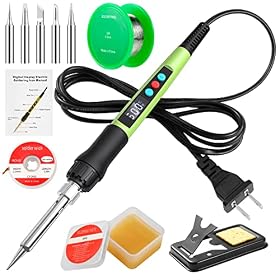
Temperature-controlled iron for general electronics work
Product prices and availability are accurate as of the date/time indicated and are subject to change. Any price and availability information displayed on Amazon.com at the time of purchase will apply to the purchase of this product.
What wattage tells you
Wattage describes how much electrical power the iron can use to heat its tip and restore heat as the tip contacts a joint. It is not the same as operating temperature. A temperature-controlled 80-watt station can hold a chosen temperature rather than continuously running hotter than a lower-wattage iron.
The tool’s performance also depends on its temperature control, tip design, and how well the tip transfers heat. A small, pointed tip may deliver heat poorly to a large joint, even on a powerful station. A wider tip with enough contact area can often make the job easier.
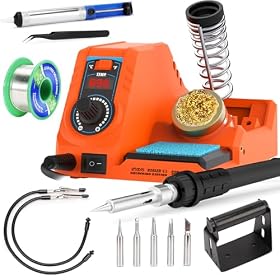
Station with more capacity for varied or larger joints
Product prices and availability are accurate as of the date/time indicated and are subject to change. Any price and availability information displayed on Amazon.com at the time of purchase will apply to the purchase of this product.
Choose by the work you do
Small circuit-board repairs and light hobby work: A temperature-controlled tool around 40–60 watts is a good general-purpose range.
Very small components or occasional simple repairs: A lower-wattage iron may be adequate, but check that it can maintain a consistent temperature and accept tips suited to the work.
Large through-hole joints, wires, connectors, or ground planes: Consider a higher-wattage station with good temperature control and appropriately sized tips. The added capacity helps the tip recover when the joint pulls heat away.
Frequent or varied electronics work: A temperature-controlled station is usually more adaptable than a basic fixed-temperature iron. Its wattage gives it heating capacity; the temperature setting lets you adjust for the task and solder.
Don’t buy by wattage alone
When comparing tools, look for temperature control, available replacement tips, and a tip size suitable for your components. Check the manufacturer’s stated temperature range and compatibility with the tips you expect to use. A high wattage rating alone does not guarantee stable temperature or good heat transfer.
Set the temperature according to the solder, components, and manufacturer guidance. Avoid compensating for a poor-fitting or undersized tip by turning the temperature excessively high; that can damage pads and components. Use ventilation or a fume extractor, and follow safe handling instructions for the iron and hot stand.
Bottom line
For a first electronics iron, start with a temperature-controlled 40–60-watt tool. Choose a higher-capacity station if you regularly work on larger, heat-demanding joints. In either case, a suitable tip and steady temperature control matter as much as the wattage number.
FAQ
Is a 30-watt soldering iron enough for electronics?
It can be enough for light work and small joints, especially if temperature-controlled. It may take longer to heat larger joints or lose temperature when working on parts that draw heat away.
Will a higher-wattage soldering iron damage circuit boards?
Not simply because it has a higher wattage rating. A temperature-controlled iron regulates its tip temperature, but excessive temperature, long contact time, or a poorly chosen tip can still damage pads or components.
Does higher wattage mean a hotter soldering iron?
No. Wattage indicates heating capacity and heat recovery. The temperature setting or control system determines the tip’s operating temperature.