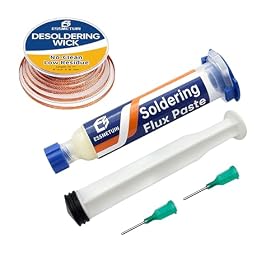
For oxidized wires, choose electronics-grade rosin or no-clean flux—not plumbing acid flux. Clean and abrade the wire first, then apply a small amount of flux and tin the conductor before making the repair.
Best flux for oxidized wires on a repair
The best flux for oxidized wires is usually an electronics-grade rosin flux or no-clean flux labeled for PCB and wire repair. Flux helps solder wet the conductor, but it cannot reliably replace cleaning. For heavily oxidized wire, remove the surface oxidation first, then use a small amount of compatible flux and fresh solder.
Avoid plumbing flux, acid-core solder, and general-purpose metal flux on electronics. Their corrosive residues can continue attacking the wire and nearby components after the repair.
Which flux should you choose?
No-clean flux
No-clean flux is a practical first choice for most small electronics repairs. It is available as a pen, liquid, gel, or paste and is intended to leave a relatively low-residue surface when used correctly.
Choose it when:
You are repairing circuit boards, connectors, or low-voltage wiring.
The joint is reasonably clean after scraping or abrasion.
You want to minimize post-solder cleaning.
The manufacturer specifically identifies it as electronics-grade.
“No-clean” does not mean “no residue.” Follow the product instructions, particularly if the repair must be highly clean, conformal-coated, or visually inspected.
Rosin or mildly activated rosin flux
Rosin flux can work well on moderately oxidized copper wire after the oxidation is removed. Mildly activated versions may wet a stubborn surface more readily than plain rosin, but they can leave more residue and may require cleaning.
Use this type when:
The wire has light-to-moderate oxidation.
You can clean the conductor before soldering.
You are prepared to remove residue afterward if the label calls for it.
A liquid flux or flux pen is useful for individual strands and tight joints. Gel or paste flux stays in place better on vertical or larger surfaces.
Water-soluble flux
Water-soluble flux can provide strong cleaning action, but its residues should generally be removed thoroughly with the cleaning method specified by the manufacturer. It is more suitable when you can safely wash, rinse, and dry the repaired assembly.
Do not leave water-soluble flux residue on a powered circuit just because the joint looks acceptable. Trapped residue can cause leakage, corrosion, or other reliability problems.
Flux types to avoid on electronics
Do not use these unless the product is specifically approved for the application:
Acid flux intended for plumbing or sheet metal
Acid-core solder for electronic repairs
Zinc chloride or similarly aggressive plumbing flux
Automotive or general metal-repair flux without electronics compatibility information
These products can damage copper conductors, solder joints, circuit boards, and connectors over time. If the wire is part of mains wiring or a safety-critical system, use the repair method and materials specified by the equipment manufacturer or have a qualified professional handle it.
How to solder an oxidized wire successfully
Flux works best when the wire is prepared correctly. Use this order rather than adding more and more flux to a contaminated conductor.
1. Disconnect power and inspect the wire
Unplug the equipment and disconnect batteries or other power sources. For mains-powered equipment, verify that it is de-energized before touching the wiring. Do not solder a wire that is hot, energized, or connected to a circuit that could unexpectedly power up.
Look for green or black corrosion, brittle strands, pitting, damaged insulation, and corrosion that extends under the insulation. If the conductor is badly eaten away, replacing the affected section is safer than trying to cover it with solder.
2. Cut back to clean metal if necessary
Lightly oxidized copper may become solderable after cleaning. If the wire remains dark, rough, or unable to accept solder, cut back farther until the exposed conductor is bright and mechanically sound.
Do not keep removing strands until only a small fraction of the original conductor remains. A smaller repaired conductor may overheat or become mechanically weak.
3. Clean and abrade the conductor
Use a suitable wire stripper, a clean blade used carefully, or fine abrasive material to remove surface oxidation without cutting deeply into the strands. For stranded wire, avoid crushing or separating the strands more than necessary.
Wipe away debris. If you use a chemical cleaner, make sure it is compatible with the insulation and the equipment, and allow the wire to dry completely before applying heat.
4. Apply a small amount of electronics flux
Coat only the area that will be soldered. Excess flux does not compensate for heavy oxidation and can make cleanup more difficult.
A flux pen is convenient for small wires. Liquid flux can wick between strands, while gel or paste is easier to control on a larger conductor. Choose the form based on access and how well you can contain the material.
5. Tin the conductor
Heat the wire with a properly sized, clean, tinned tip, then feed solder into the heated wire—not directly onto the iron tip as the main method. The solder should flow around and between the strands instead of forming a blob on the surface.
If the solder beads up, withdraw the heat and reassess the surface, tip condition, flux type, and temperature setting. Adding more flux may help only after the conductor is clean.
Do not overheat the wire. Excess heat can melt insulation, loosen connector parts, damage nearby components, or wick solder farther under the insulation than intended.
6. Make the joint and inspect it
Join the tinned conductors or place the tinned wire into the terminal, then heat the joint long enough for the solder to flow together. Allow it to cool without movement.
A sound joint should be mechanically stable and should not rely on a large solder mass for strength. Check for loose strands, solder bridges, cracked insulation, and solder that has wicked into a flexible section and made it unusually rigid.
7. Clean residue when required
Follow the flux label. Residue from no-clean products may be left in some applications, while rosin and water-soluble residues may still need removal for reliability, appearance, or insulation requirements.
Use the recommended electronics cleaner and a lint-free swab or brush. Keep liquid away from components and openings that could trap it. Let the assembly dry fully before reconnecting power.
Product prices and availability are accurate as of the date/time indicated and are subject to change. Any price and availability information displayed on Amazon.com at the time of purchase will apply to the purchase of this product.
Why flux may not fix the problem
If the wire still will not take solder, check these causes:
The oxidation is too deep. Cut back farther or replace the damaged wire.
The soldering tip is oxidized or dirty. Clean and re-tin the tip, or replace it if it will not wet properly.
The iron is underpowered or the tip is too small. A larger conductor or connector may draw heat away faster than the iron can supply it.
The wire is contaminated. Oil, adhesive, insulation residue, and corrosion products can prevent wetting.
The flux is wrong or expired. Confirm that it is electronics-grade and suitable for copper and the repair temperature.
The surface is moving during soldering. Secure the wire and connector so the joint can cool undisturbed.
The wire is aluminum or another difficult-to-solder material. Ordinary rosin flux may not work. Use a repair method specifically approved for that conductor or replace the connection with a suitable terminal or splice.
Do not increase the iron temperature indefinitely to overcome poor wetting. If the insulation is shrinking, discoloring, or burning before the joint forms, stop and correct the preparation, tip size, heat transfer, or repair method.
Product prices and availability are accurate as of the date/time indicated and are subject to change. Any price and availability information displayed on Amazon.com at the time of purchase will apply to the purchase of this product.
Flux form: pen, liquid, gel, or paste
Flux pen: Best for controlled application on small wires, pads, and connector pins.
Liquid flux: Wicks into stranded wire and tight areas but can spread more easily.
Gel flux: Stays where applied and works well for localized repairs.
Paste flux: Useful on larger surfaces, but apply sparingly and follow the cleaning directions.
The chemical classification and electronics suitability matter more than the package shape. Look for clear labeling such as electronics-grade, rosin, no-clean, or compatibility with electronic soldering.
Product prices and availability are accurate as of the date/time indicated and are subject to change. Any price and availability information displayed on Amazon.com at the time of purchase will apply to the purchase of this product.
When replacement is better than more flux
Replace the wire, terminal, or connector when corrosion extends under the insulation, strands are missing or brittle, the terminal has lost its spring tension, or the repair carries substantial current. A soldered patch is not an appropriate substitute for a correctly rated crimp, terminal, fuse connection, or manufacturer-approved splice in every application.
For a small low-voltage electronics repair, electronics-grade no-clean or rosin flux is usually the sensible starting point. For mains wiring, high-current wiring, safety circuits, or equipment with hidden corrosion, follow the manufacturer’s repair procedure or consult a qualified professional.
Product prices and availability are accurate as of the date/time indicated and are subject to change. Any price and availability information displayed on Amazon.com at the time of purchase will apply to the purchase of this product.
FAQ
Can I use plumbing flux on oxidized wires?
No. Plumbing flux is often acidic and can corrode electronic wiring, solder joints, and circuit boards. Use flux labeled for electronics instead.
Is no-clean flux safe to leave on a solder joint?
It may be acceptable when used as directed, but no-clean flux can still leave residue. Follow the product label and clean the assembly when required by the application or manufacturer.
Why does solder bead up on my oxidized wire?
The conductor may still be oxidized or contaminated, the soldering tip may be dirty, or the iron may not be transferring enough heat. Clean or cut back the wire, use a fresh tinned tip, apply electronics-grade flux, and tin the conductor before making the joint.
Should I use rosin-core solder and separate flux together?
Rosin-core solder may be enough for clean wire, but a small amount of separate electronics-grade flux can help with oxidation after the conductor has been cleaned. Avoid flooding the joint with flux.
Can flux repair badly corroded copper wire?
No. Flux cannot restore missing or brittle copper. Cut back to sound conductor or replace the wire, terminal, or connector when corrosion is extensive.