A small soldering fume extractor’s carbon filter does not have one universal service life. Usage, flux type, airflow, and filter size all matter. Learn when to replace it and what carbon filtration can—and cannot—remove.
Carbon filter life in a small fume extractor
A carbon filter in a small soldering fume extractor may last anywhere from weeks to many months, depending on how often you solder, how much smoke you produce, and the filter’s amount of activated carbon. The manufacturer’s replacement interval is the best starting point, but odor, visible contamination, and reduced performance can indicate that the filter needs attention sooner.
What the carbon filter does
Activated carbon adsorbs some gases and odor-producing compounds from soldering fumes. It is useful for reducing the smell associated with flux and rosin-based soldering.
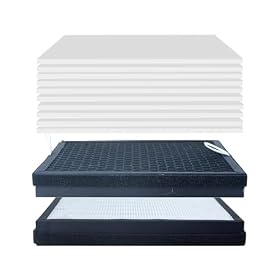
Carbon is not a complete substitute for ventilation, and it does not perform the same job as a particulate filter. A unit may use:
A prefilter: Captures larger dust and debris and helps protect the main filter.
A particulate or HEPA-style filter: Captures airborne particles, if the extractor includes one.
An activated-carbon filter: Helps reduce gases and odors.
Check the extractor’s filter arrangement before buying replacements. Some small units use a thin carbon pad, while others use a deeper cartridge with considerably more carbon. Those designs should not be expected to have the same service life.
How long should a carbon filter last?
There is no reliable universal number of hours. A filter used for occasional short soldering sessions may last substantially longer than one used daily in a busy work area. Factors that shorten carbon-filter life include:
Product prices and availability are accurate as of the date/time indicated and are subject to change. Any price and availability information displayed on Amazon.com at the time of purchase will apply to the purchase of this product.
Signs the carbon filter needs replacement
Replace the filter when the manufacturer’s interval has elapsed or when performance has clearly declined. Common warning signs include:
Flux odor remains noticeable at the outlet or around the work area. Odor is a useful warning sign, but it is not a precise measurement of carbon saturation.
The filter is visibly dirty, contaminated, damaged, or damp. A carbon pad that is torn, compressed, or exposed to liquid should not be reused.
The extractor’s filter indicator signals service. Follow the manual’s instructions for resetting or interpreting the indicator.
Airflow has dropped. This may indicate a clogged prefilter or particulate filter rather than exhausted carbon, so inspect the full filter path before replacing only the carbon layer.
Smoke is escaping around the filter or housing. Check for a missing filter, incorrect installation, or a damaged gasket before assuming the carbon is used up.
Do not rely on smell alone. Some hazardous components may have little or no detectable odor, and a carbon filter that reduces smell is not proof that all harmful contaminants have been removed.
Product prices and availability are accurate as of the date/time indicated and are subject to change. Any price and availability information displayed on Amazon.com at the time of purchase will apply to the purchase of this product.
Check the extractor before blaming the carbon filter
If the unit seems ineffective, work through these checks in order:
1. Inspect the prefilter and particulate filter
Turn the extractor off and unplug it before opening the housing. Follow the manufacturer’s instructions and look for dust, solder debris, or a filter that is visibly loaded. Replace disposable filters rather than washing them unless the manual specifically says they are washable.
2. Check the intake and airflow path
Remove obstructions near the intake, nozzle, grille, or fan outlet. Make sure the extractor is positioned close enough to capture the plume without interfering with the soldering work. A small unit placed too far away may appear ineffective even with a fresh carbon filter.
3. Confirm the filter is installed in the correct direction
Some filters have an airflow direction or a specified order. A reversed filter, missing seal, or loose cover can allow fumes to bypass the media.
4. Check for leaks
Inspect the filter frame, cover, duct, and gaskets. Air taking an easier path around the filter will reduce capture regardless of the carbon’s condition.
5. Replace the carbon filter if it is due or contaminated
Use a replacement specified for the extractor. A generic carbon sheet may not seal correctly, may contain too little carbon, or may restrict airflow. Do not assume that a similarly sized filter is compatible.
6. Inspect the fan last
If the filters are clean, correctly installed, and sealed but airflow remains weak, the fan, switch, power supply, or control circuit may be at fault. Unplug the unit before inspection, and do not open or repair mains-powered equipment unless you are qualified to do so. Manufacturer service or replacement is the safer choice when an electrical fault is suspected.
Product prices and availability are accurate as of the date/time indicated and are subject to change. Any price and availability information displayed on Amazon.com at the time of purchase will apply to the purchase of this product.
Can you clean or reuse a carbon filter?
Usually, no. Lightly brushing or vacuuming the outside may remove loose dust from a prefilter, but it does not restore activated carbon’s adsorption capacity. Do not wash a carbon cartridge or heat it to “refresh” it unless the manufacturer specifically provides a regeneration procedure.
A reusable prefilter and a replaceable carbon cartridge should be treated differently. Replace the carbon element at the recommended interval, and clean or replace the prefilter according to the manual.
Choosing a replacement carbon filter
Before ordering, confirm:
The exact extractor model or replacement-part number
The filter’s dimensions and mounting method
Whether it is carbon-only or a combined particulate-and-carbon filter
The airflow direction and filter order
Whether the replacement includes a frame, gasket, or prefilter
A thicker filter is not automatically better if it blocks the fan or cannot seal in the housing. Compatibility, adequate airflow, and a complete seal matter as much as the carbon material itself.
When to replace the extractor instead
A replacement filter is usually the reasonable next step when the fan still provides normal airflow and the housing, seals, and controls are intact. Consider replacing the entire unit when replacement filters are unavailable, the housing cannot seal, airflow remains poor with fresh filters, or the fan and electrical controls are failing.
For frequent soldering, place the extractor close to the smoke source and use suitable general ventilation as well. A small desktop carbon unit should be viewed as supplemental source capture—not as permission to solder in an unventilated room or to ignore the manufacturer’s safety guidance.
How often should I replace the carbon filter in a small solder fume extractor?
Follow the extractor manufacturer’s interval first. Occasional use may allow a longer interval, while daily soldering, heavy flux smoke, and small thin filters can require more frequent replacement. Replace it sooner if odor persists, the filter is damaged, or the unit’s service indicator activates.
Does a carbon filter remove all soldering fumes?
No. Activated carbon helps adsorb some gases and odors, while a particulate filter captures particles when the extractor includes one. Neither makes poor ventilation safe, and some contaminants may not produce an odor.
Can I wash an activated-carbon filter?
Generally, no. Washing can damage the media and does not restore its adsorption capacity. Replace the carbon filter unless the manufacturer specifically says it is washable or regenerable.
Why is my fume extractor weak after replacing the carbon filter?
Check that the filter is the correct type, installed in the correct direction, and sealed properly. Inspect the prefilter, intake, grille, and outlet for clogs. If airflow is still weak with clear airflow paths, the fan or electrical system may need manufacturer service or unit replacement.