Compact Fume Extractor for a Desk: What to Look For
A compact fume extractor can reduce soldering smoke at a desk, but the right choice depends on filter design, airflow, arm reach, noise, and how close the intake can sit to the work area.
Compact fume extractor for a desk
A compact fume extractor for a desk should capture soldering smoke close to the joint without taking over your workspace. For most electronics benches, look for a small unit with a replaceable activated-carbon filter, a prefilter or particulate filter, an adjustable intake position, and controls that let you run enough airflow without creating excessive noise or disturbing small components.
A desk extractor is a useful exposure-control tool, but it is not a substitute for ventilation. Keep the work area reasonably ventilated, avoid breathing directly over the solder joint, and follow the solder, flux, and extractor manufacturer's instructions.
What a compact soldering fume extractor does
Soldering fume extractors pull smoke away from the work area and pass it through one or more filters. The most relevant filter stages are:
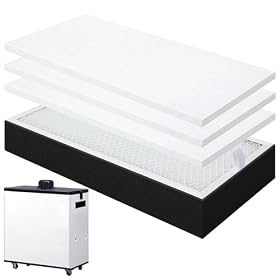
Prefilter: Helps catch larger particles and protects the main filter.
Particulate filter: Captures airborne particles when the unit includes one.
Activated carbon: Helps adsorb some gases and odors from soldering flux.
A small extractor works best when its intake is positioned close to the smoke source. If it sits far away at the back of the desk, smoke can pass your breathing zone before reaching the filter. A compact unit with a movable arm or directional intake is usually more useful than a larger unit that cannot be positioned properly.
Features that matter on a desk
Filter type and replacement availability
Check what the unit is designed to filter and whether replacement filters are readily available. Activated carbon is particularly relevant to flux odors, while particulate filtration addresses airborne particles. Some products use a combined filter cartridge; others use separate stages.
Do not assume that a carbon filter removes every hazardous substance. Filter performance depends on the filter media, airflow, contaminant concentration, and how long the filter has been used. Replace filters according to the manufacturer's guidance, or sooner if airflow drops, odors return, or the filter becomes visibly loaded.
Intake placement
A flexible arm, adjustable hood, or directional intake makes a major difference. The intake should be close enough to intercept smoke at the source without interfering with your soldering iron, lighting, magnifier, or hand movement.
For a compact desk setup, consider:
Arm reach and how much of the work area it can cover
Whether the arm stays in position without sagging
Intake opening size and direction
Ease of repositioning between boards
Whether the base can sit securely beside the project
A unit that is slightly less powerful but easy to place correctly may outperform one with more airflow and poor positioning.
Airflow control
Multiple airflow settings are useful because different tasks need different amounts of capture. Higher airflow may be helpful for larger smoke-producing jobs, while a lower setting can reduce noise and avoid moving lightweight components, solder braid, or loose wires.
Manufacturers do not always report airflow using the same measurement conditions, so avoid comparing numbers without checking how they were measured. Treat published airflow as a reference rather than a guarantee of capture at your exact work distance.
Noise
Noise matters if the extractor will run beside you for long repair or assembly sessions. Look for a unit with adjustable speed and a published noise specification when available. A quieter low setting can make it easier to keep the extractor running consistently instead of switching it off because it is distracting.
Noise specifications are not always directly comparable between products. The measured distance, fan speed, enclosure, and room can affect the result.
Size, stability, and power
Measure the available desk space before buying. Check the footprint, height, arm clearance, and the location of the power cable. A narrow base may save space but can be easier to knock over if the arm is extended.
Also verify the power requirements. A product intended for a different voltage or plug standard may require an appropriate version or power arrangement. Do not modify electrical connections unless you are qualified to do so, and follow the manufacturer's instructions for grounding and operation.
Product prices and availability are accurate as of the date/time indicated and are subject to change. Any price and availability information displayed on Amazon.com at the time of purchase will apply to the purchase of this product.
Compact extractor types for a desk
Small benchtop units
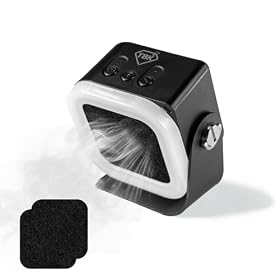
These place the filter and fan in a compact housing near the work area. They are simple to set up and generally suit occasional soldering, repair work, and small electronics projects. Their main limitation is that the intake may need to be positioned very close to the joint.
Arm-mounted extractors
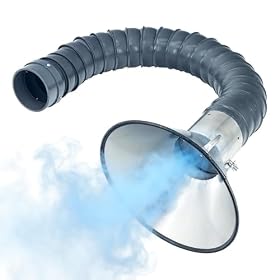
These use a flexible or articulated arm to position the intake above or beside the work. They are often the most convenient format for a desk because the capture point can move with the project. Check the arm's reach, stiffness, and whether it blocks your view or lighting.
Fan-and-filter units with a hood
A hood or broad intake can cover a larger area, but it may take up more desk space and be harder to position close to a specific joint. This style can be practical if several people share the workspace or if you solder larger assemblies.
External or ducted ventilation
A ducted system can move contaminants outside the room rather than recirculating filtered air. It requires suitable installation and is not automatically appropriate for every building or material. If you are considering a permanent or high-use setup, consult the equipment instructions and, where necessary, a qualified ventilation professional.
Product prices and availability are accurate as of the date/time indicated and are subject to change. Any price and availability information displayed on Amazon.com at the time of purchase will apply to the purchase of this product.
How to choose one for your workspace
Use this checklist before buying:
Measure the desk: Include the extractor base, arm swing, project area, and cable routing.
Identify the smoke source: Decide whether you need an intake directly over a small joint or broader coverage.
Check filter stages: Confirm whether the unit includes activated carbon, particulate filtration, or both.
Confirm replacement filters: Look for a clear replacement part and service procedure.
Compare controls: Adjustable airflow is more flexible than a single fixed speed.
Consider noise: A quieter unit is more likely to remain on during long sessions.
Check power compatibility: Match voltage, plug, and any grounding requirements to your workspace.
Plan ventilation: Use the extractor as part of a sensible ventilation strategy, not as the only safety measure.
For occasional hobby work, a small benchtop or arm-mounted unit may be sufficient. For frequent repair work, choose a design with accessible replacement filters, durable positioning hardware, controllable airflow, and a construction that can tolerate regular cleaning.
Product prices and availability are accurate as of the date/time indicated and are subject to change. Any price and availability information displayed on Amazon.com at the time of purchase will apply to the purchase of this product.
Setup tips for better capture
Place the intake so smoke travels into it before reaching your face. Keep it close to the joint, but not so close that it contacts the iron, molten solder, or the board. Start with a moderate airflow setting and increase it if smoke is escaping around the intake.
Avoid placing the extractor behind your head or directly above your face. Arrange the airflow so it pulls smoke away from you rather than across your breathing zone. Keep the intake path clear, and do not cover vents unless the manufacturer specifically allows that configuration.
Run the extractor while soldering and for a short period afterward if the instructions recommend it. Inspect the filter and housing regularly, especially if you work with a lot of flux or produce visible smoke.
When a compact extractor is not enough
A small desk unit may be inadequate when you solder for extended periods, work with substantial smoke or chemical vapors, use materials beyond ordinary electronics soldering, or need to protect several people in a shared room. In those cases, consider a more capable source-capture or room-ventilation system and seek appropriate professional guidance.
If the extractor's airflow remains weak after filter replacement and cleaning, check for blocked vents, loose filter installation, or a damaged fan. Stop using the unit if it has a damaged cord, unusual burning smell, overheating, sparking, or other electrical fault. Do not open or repair mains-powered equipment unless you are qualified; contact the manufacturer or a qualified technician.
Bottom line
For a desk soldering setup, prioritize close and adjustable smoke capture, replaceable filtration, manageable noise, and a stable footprint. Activated carbon is useful for flux odors, but filtration claims should be read carefully, and good room ventilation remains important. The best compact extractor is the one you can position near the joint and keep running without obstructing your work.
FAQ
Do I need a fume extractor for soldering at a desk?
A fume extractor is a sensible way to reduce soldering smoke near your work area, especially during frequent or extended sessions. It should supplement, not replace, reasonable room ventilation and safe soldering practices.
Is activated carbon enough for soldering fumes?
Activated carbon can help reduce some odors and gases from flux, but performance depends on the filter design and operating conditions. Some extractors also include particulate filtration. Check the manufacturer's stated filtration capabilities and replace filters as directed.
Where should I place a compact fume extractor?
Place the intake close to the solder joint and slightly to the side or above it so smoke is captured before reaching your face. Do not position it where it interferes with the iron, blocks your view, or pulls smoke across your breathing zone.
How often should I replace the filter?
Follow the manufacturer's replacement schedule. Replace it sooner if airflow decreases, odors return, the filter is visibly dirty, or the unit becomes difficult to use at its normal setting.
Can a desk fume extractor remove all soldering hazards?
No. A compact extractor reduces smoke at the source but cannot guarantee removal of every contaminant. Use appropriate soldering materials and work practices, maintain ventilation, and follow the safety instructions for the solder, flux, and extractor.