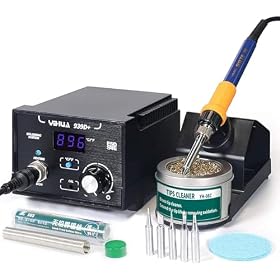
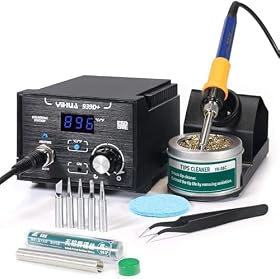
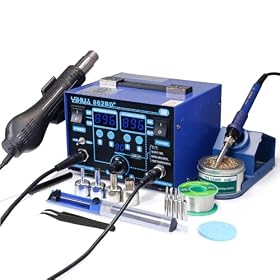
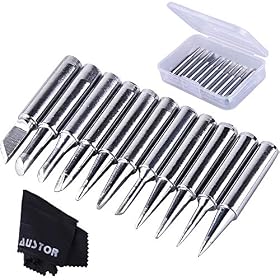
The best soldering station for fine-pitch work gives you stable temperature control, compatible small tips, fast thermal recovery, and a comfortable handpiece. Here is what matters most when comparing stations for SMD and other delicate electronics.
Best soldering station for fine-pitch work
The best soldering station for fine-pitch work is one that keeps the tip stable, accepts genuinely small tips, and lets you make controlled joints without excessive heat or hand fatigue. For surface-mount devices, closely spaced pins, and delicate pads, tip compatibility and ergonomics usually matter more than chasing the highest advertised wattage.
What matters most for fine-pitch soldering
Stable temperature control
Fine-pitch work benefits from a station that maintains a consistent tip temperature as the joint absorbs heat. Temperature stability helps reduce two common problems: cold joints caused by heat loss and lifted pads caused by excessive or prolonged heating.
Look for:
Adjustable temperature with a clear, readable display
A control system that responds quickly when the tip contacts a joint
Temperature presets or lockout features if multiple users share the station
Compatibility with the temperatures recommended for your solder and components
A higher temperature is not automatically better. Use the lowest setting that allows the solder to flow promptly, following the solder, component, board, and station manufacturer’s guidance.
Tip selection and availability
The station is only as useful as the tips available for it. Fine-pitch work commonly requires a small conical, fine bevel, or narrow chisel tip, depending on the joint and technique. A very sharp needle tip may look precise, but it often transfers heat poorly and can make soldering slower.
Before buying, confirm that the station supports:
Tips small enough for the pitch and access you need
A shape that can carry a small amount of solder
Easy tip replacement
Readily available replacement tips
Tip sizes and shapes suitable for both drag soldering and individual joints
For closely spaced leads, a narrow chisel or fine bevel can be more practical than an extremely pointed tip because its flat edge transfers heat efficiently while helping control the solder.
Thermal recovery
Thermal recovery describes how quickly the tip returns to its working temperature after contacting a pad, lead, or ground plane. This matters when soldering several joints in succession or working on boards with large copper areas that draw heat away.
Fast recovery can make a station feel more responsive, but it does not replace correct technique. A tip that is too small for the joint may still struggle, even with a powerful station. Choose the tip for the thermal demands of the work, not just the apparent size of the component.
Handpiece size and balance
Fine-pitch soldering requires small, controlled movements. A bulky or poorly balanced handpiece can make it harder to hold the tip steady and can increase fatigue during inspection and rework.
Prioritize:
A slim grip near the tip
Flexible cable movement
Low enough handpiece weight for prolonged bench work
A comfortable distance between the grip and heated tip
A secure stand that keeps the hot tip away from the work surface
If possible, consider how the handpiece, cable, stand, and control unit will fit around your microscope, magnifier, or fume extraction setup.
ESD protection
For modern electronics, an ESD-safe station can help reduce the risk of static discharge damaging sensitive components. Look for clearly stated ESD protection and follow the station manufacturer’s grounding instructions.
ESD protection is only one part of a safe workstation. Use an appropriate grounded mat, wrist strap, or other protective equipment when required by the component and work environment. Do not assume a station is ESD-safe unless the manufacturer specifies it.
Soldering station features worth paying for
Replaceable cartridge or tip systems
Some stations use a conventional heated tip that slides over a heater, while others use integrated tip-and-heater cartridges. Both approaches can work for fine-pitch soldering.
A conventional tip system may offer a broad selection of affordable shapes. A cartridge system can place the heating element closer to the joint and may simplify tip changes. Compare the ongoing availability and cost of the compatible tips, not just the station’s initial features.
Temperature presets and calibration
Presets are useful when switching between leaded solder, lead-free solder, component rework, and larger joints. A station with calibration capability can also help compensate for differences between the displayed temperature and the actual tip temperature.
The displayed number is not necessarily the exact temperature at the solder joint. Tip shape, airflow, solder composition, contact time, and the board’s copper area all affect the result.
Sleep mode and automatic standby
Sleep or standby features can reduce tip oxidation and extend tip life when the iron is left in its stand. An automatic shutoff can add protection if the iron is forgotten, but make sure it will not interrupt long work sessions unexpectedly.
Tip cleaning and maintenance compatibility
Fine tips oxidize and wear faster when overheated, left dry, or cleaned aggressively. A good station should work with the manufacturer’s recommended cleaning method and tip-tinning procedure.
Use a damp sponge only if the manufacturer recommends it; many modern tips are intended to be cleaned with brass wool or another specified method. Keep a small amount of solder on the tip when it is hot and idle, and remove excess solder before making a joint.
Product prices and availability are accurate as of the date/time indicated and are subject to change. Any price and availability information displayed on Amazon.com at the time of purchase will apply to the purchase of this product.
How to match the station to your work
Occasional fine-pitch repairs
For occasional connector, sensor, or small board repairs, prioritize a reliable temperature-controlled station with an ergonomic handpiece and an affordable range of fine tips. You may not need advanced logging, network controls, or a large collection of presets.
Frequent SMD assembly
For regular fine-pitch assembly, prioritize fast thermal response, comfortable long-session handling, a broad tip ecosystem, and easy replacement parts. A stable stand and effective fume extraction are also important because repetitive work increases exposure to solder and flux fumes.
Lead-free soldering
Lead-free solder generally requires more heat and can be less forgiving of inadequate thermal transfer than traditional leaded solder. Choose a station and tip combination that can maintain the manufacturer-recommended working temperature without requiring excessive dwell time on each pad.
The correct tip size remains important. A tiny tip may be appropriate for access, but a slightly wider fine tip can often transfer heat more effectively to the joint.
Microscope or magnifier work
If you solder under magnification, select a handpiece that does not block your view and has a cable that will not pull the tool sideways. Check that the stand can be placed outside the microscope’s working area while still allowing a safe return path.
Product prices and availability are accurate as of the date/time indicated and are subject to change. Any price and availability information displayed on Amazon.com at the time of purchase will apply to the purchase of this product.
A practical fine-pitch setup
A station alone does not determine the quality of your joints. A useful setup typically includes:
A fine bevel, narrow chisel, or other task-appropriate tip
Flux suitable for the board and soldering process
Solder with a diameter appropriate for small joints
Magnification and strong, shadow-free lighting
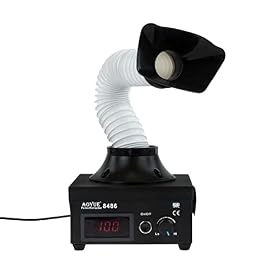
Fume extraction positioned near the work area
Tweezers and a way to secure the board
A brass tip cleaner or the cleaning method specified by the tip manufacturer
For drag soldering, apply a small amount of flux, use a lightly tinned tip, and move steadily across the row of pins. If bridges form, remove excess solder with solder wick and fresh flux rather than repeatedly heating the same area.
Product prices and availability are accurate as of the date/time indicated and are subject to change. Any price and availability information displayed on Amazon.com at the time of purchase will apply to the purchase of this product.
Common buying mistakes
Choosing the smallest tip available
The smallest tip is not always the most precise. If it cannot transfer enough heat, you may hold it on the joint too long. A slightly broader fine tip can provide better control and reduce heating time.
Focusing only on maximum wattage
Rated power can indicate available heating capacity, but it does not by itself describe temperature stability, tip efficiency, or thermal recovery. Compare the complete system: handpiece, heater or cartridge design, tip range, controls, and replacement support.
Ignoring replacement-tip costs
Fine tips wear out. Before choosing a station, check whether the tip shapes you need are available and whether replacements are easy to source. A station with inexpensive hardware can become costly if its compatible tips are limited or difficult to find.
Buying a station without a proper stand
A secure stand is a safety feature, not just an accessory. It should keep the hot tip stable, provide a safe resting angle, and allow you to return the handpiece without reaching across the work.
Using an unsuitable tip temperature
Too little heat encourages long contact times and poor wetting. Too much heat can damage insulation, pads, components, and the tip itself. Start with the solder and component manufacturer’s guidance, then adjust only as needed for the joint and board.
Product prices and availability are accurate as of the date/time indicated and are subject to change. Any price and availability information displayed on Amazon.com at the time of purchase will apply to the purchase of this product.
Bottom line
For fine-pitch work, choose a temperature-controlled station with dependable thermal recovery, a comfortable slim handpiece, verified ESD protection when needed, and a strong selection of compatible small tips. Give extra weight to tip availability and ergonomics, because those factors affect every joint and every future repair. A well-matched fine tip, flux, magnification, and fume extraction will often improve results more than moving to a station with a higher maximum power rating.
FAQ
What temperature should I use for fine-pitch soldering?
Use the temperature recommended for your solder and components, then adjust only as needed for reliable wetting and short contact time. The correct setting depends on solder type, tip shape, board construction, and the joint’s thermal mass, so there is no single temperature that fits every fine-pitch job.
Is a conical tip best for fine-pitch soldering?
Not always. A fine conical tip can reach tight spaces, but a narrow chisel or fine bevel often transfers heat more efficiently and can hold a controlled amount of solder. Choose the shape based on access, joint size, and whether you are soldering individual pins or drag soldering.
How much power does a fine-pitch soldering station need?
Maximum wattage is less important than stable temperature control and thermal recovery. Fine-pitch joints are small, but nearby ground planes and copper areas can draw substantial heat. Choose a station with enough heating capacity for your boards while using an appropriately sized tip.
Do I need an ESD-safe soldering station for electronics?
An ESD-safe station is a sensible choice for work involving static-sensitive components, provided it is installed and grounded according to the manufacturer’s instructions. It should be used as part of a broader ESD-control setup when the components require that protection.
How often should soldering tips be replaced?
Replace a tip when its working surface is visibly damaged, pitted, difficult to tin, or no longer transfers heat consistently after proper cleaning. Tip life depends on temperature, solder and flux chemistry, cleaning method, and how long the tip is left hot.